


A straightforward first wagon build is about clear assembly, not simply choosing the kit with the fewest parts. Simple wagon kits for beginners are easier to assess when the instructions, fitting sequence and level of detail suit your experience and available tools.
It’s reasonable to want a satisfying model without feeling overwhelmed by unfamiliar components or tricky assembly. A beginner-friendly choice should make it clear what you’re building and how the main pieces fit together, while leaving room to enjoy the modelling process.
This guide explains what to look for in a wagon kit, how to assess its likely complexity and which practical considerations can shape your choice. You’ll be better equipped to compare builds and select a first project that suits your skills, workspace and expectations.
Key Takeaways
- Judge a first build by how clearly its parts and assembly steps are explained, not by part count alone.
- Match the wagon’s scale and level of detail to your layout, skills and available modelling space.
- Consider the tools and finishing work involved before choosing a kit, so the project fits your setup.
- Explore OO9 locomotive and wagon kits when a narrow gauge model railway is the direction you want to take.
Simple wagon kits for beginners
A simple wagon kit for beginners should make the scope of the build clear before assembly starts. “Simple” can mean fewer separate parts, clear instructions, straightforward finishing or fewer additional components to source. Check each point separately rather than assuming one guarantees the others.
Start with the kit description and identify the type of wagon. An open wagon, for example, has a different structure from a covered van. Your preferred subject affects which details matter most, including the body shape, visible framework and intended load. Choose a wagon that interests you, while keeping the construction demands in mind.
Next, establish what the kit includes and what the build requires. Check the description for parts, assembly instructions and any stated requirements for tools or additional components. A kit may supply the wagon body but leave other parts or finishing materials to the modeller. Knowing this early helps you plan the complete project instead of judging the kit by its appearance alone.
Assess the assembly before choosing
Look for a clear assembly sequence, not just a photograph of the finished wagon. Instructions are easier to follow when they identify parts and show how each stage leads to the next. If assembly images are provided, check whether they show the main joins and construction order. A polished finished example alone cannot tell you how easy the build will be.
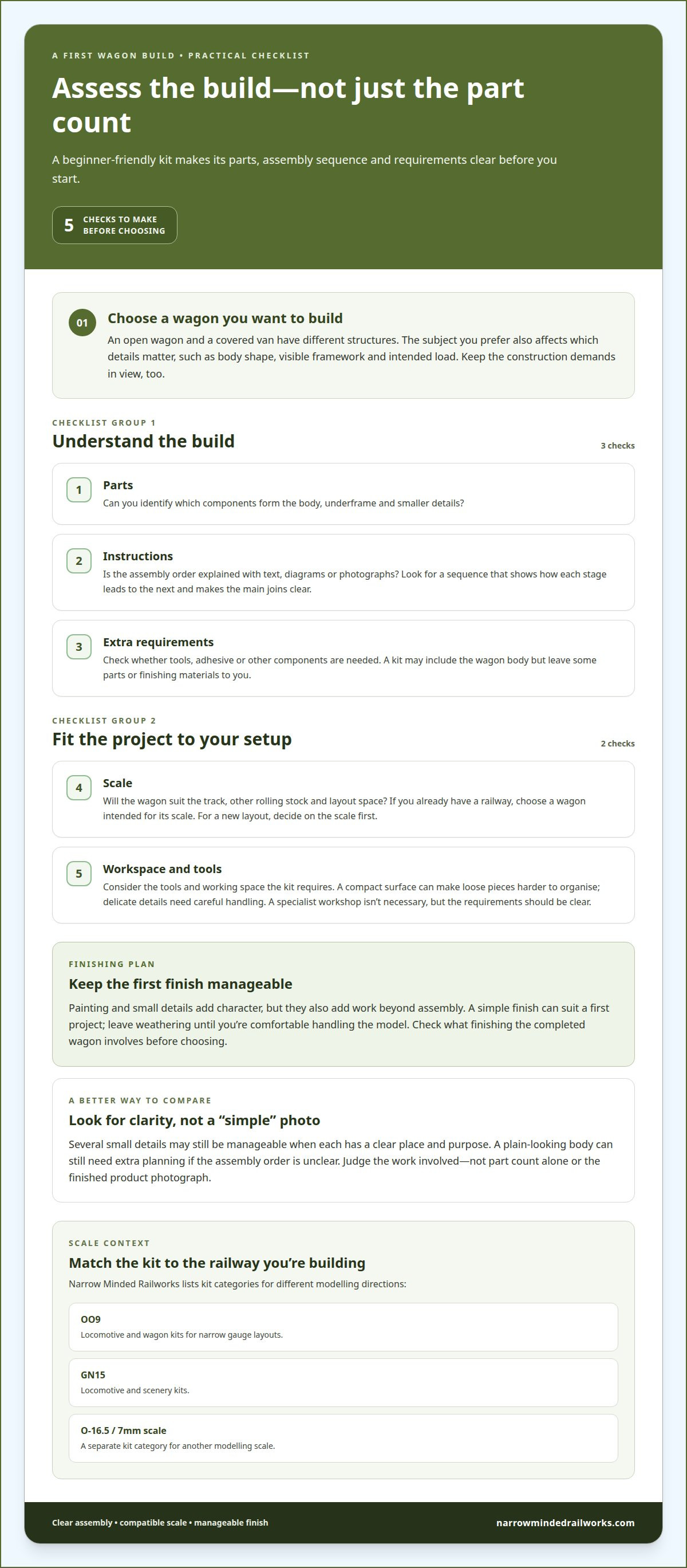
Use this short assessment before choosing your first kit:
- Parts: Can you tell which components form the body, underframe and smaller details?
- Instructions: Is the assembly order explained with text, diagrams or photographs?
- Extra requirements: Does the description say whether tools, adhesive or other components are needed?
- Finish: Can you see what painting or detailing the completed model involves?
- Scale: Does the wagon suit the track and layout you intend to use?
These checks make comparisons more useful than counting parts alone. Several small details may still be manageable when each has a clear place and purpose. Conversely, a plain-looking body can require extra planning if the assembly order is unclear. Focus on the work involved, not how simple the product photograph looks.
Match the build to your setup
Your workspace also matters. A compact work surface can make it harder to organise loose pieces, while delicate details call for careful handling. You don’t need a specialist workshop to begin, but you should understand which tools and working space the kit requires. Follow the kit’s instructions for assembly.
Scale is another practical decision. It determines how the wagon fits with your track, other rolling stock and layout space. If you already have a railway, choose a wagon intended for its modelling scale. If you’re planning a new layout, decide on the scale first, then choose a suitable wagon. An incompatible scale can make a model look out of place, even when assembly is straightforward.
Finally, choose a first build with a manageable finishing plan. Painting and small details add character, but also mean extra work beyond assembly. A simple finish can suit a first project; leave weathering until you’re comfortable handling the model. Simple wagon kits for beginners are most useful when the assembly, scale and finishing requirements fit your aims. Start with a kit whose requirements you understand before joining the first parts.
Narrow Minded Railworks: OO9 Locomotive & Wagon Kits
Narrow Minded Railworks offers OO9 Locomotive & Wagon Kits for modellers building narrow gauge layouts and choosing rolling stock to suit them. If your track plan uses OO9, this range provides a relevant place to explore wagon kit options alongside locomotive kits. The right choice depends on your layout’s scale, the wagon style you want to model and the kind of build you’re ready to undertake.
For a different modelling direction, Narrow Minded Railworks also offers GN15 Locomotive & Scenery Kits, O-16.5 / 7mm Scale Kits, and Diorama Tools & Scenery. These categories can help you develop a layout or scene around your chosen modelling scale, rather than treating a wagon as an isolated project.
If you’re ready to discuss your model railway plans, contact Narrow Minded Railworks.
Make your first build part of a bigger plan
Your first wagon doesn’t have to be a standalone project. Treat it as the starting point for a layout you can develop over time: choose a setting, decide the wagon’s role, and let those choices guide later scenery and rolling stock. This gives each build a purpose without requiring you to plan an entire railway before you begin.
As you gain experience, take on more involved detailing or explore a different scene. Simple wagon kits for beginners can help you start with a manageable project and discover which parts of railway modelling you enjoy most. Note what worked, what felt challenging and what you’d like to try next. Those observations can guide your next choice.
If you’re ready to shape a first build around your own layout ideas, contact Narrow Minded Railworks to discuss your plans. A clear starting point can turn an idea into a satisfying model railway project.