


A compact calm kit works best when it brings together a few personal, portable tools that engage more than one sense. Kit building for stress relief can start with a small pouch, a grounding object and a reassuring reminder or activity. Keep everything easy to reach, then adjust the contents as you learn what helps.
Stress can make it harder to decide what to do in the moment. Preparing a few options in advance can make it easier to pause. The kit won’t remove the source of stress, but it can offer practical ways to steady yourself and choose a next step.
This guide explains how to choose and organise a compact kit, adapt it for home, work or travel, and refresh it over time. You’ll also learn how to match tools to your preferences and when a kit can support, rather than replace, other help.
Key Takeaways
- Choose a few small, meaningful items that engage two or three senses, then keep them together in an easy-to-reach pouch.
- Make your kit work across settings by pairing portable physical tools with a calming playlist or other digital reminder.
- Notice which tools help you feel grounded, and refresh the contents every few months as your needs change.
- Use creative building activities as another way to focus and unwind, choosing a project that suits your interests and available space.
Using the kit at home, work or while travelling
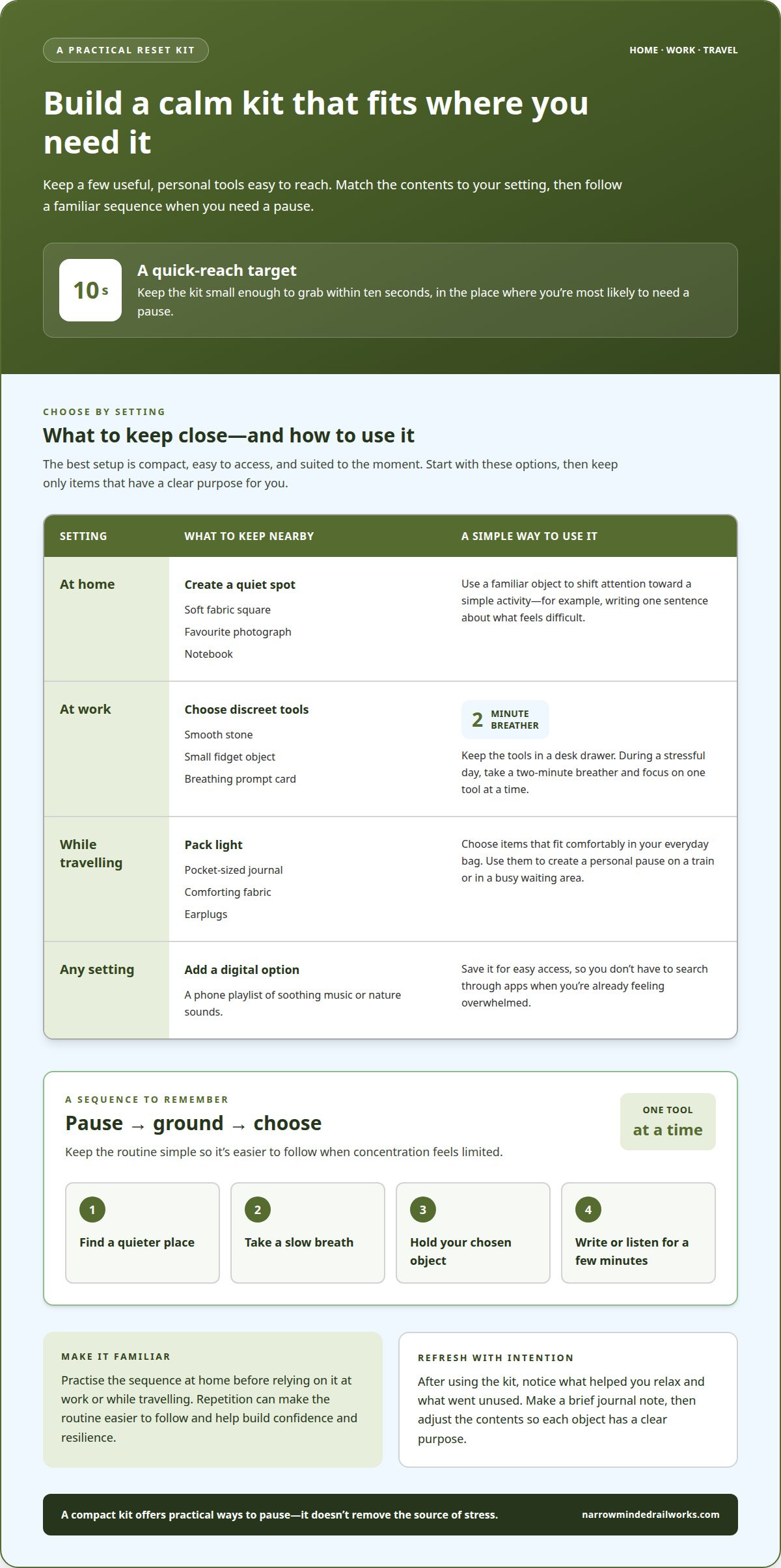
- Choose a container you can locate quickly, such as a small pouch, desk drawer or bedside box. A calm kit should be small enough to grab within ten seconds. Keep it in the place where you’re most likely to need a pause, rather than storing it out of sight.
- At home, create a quiet spot with a soft fabric square, a favourite photograph and a notebook. You can also incorporate dedicated relaxation tools into your rest space, such as grounding mats and bedding from Sleep Earthed to help you unwind. Familiar objects can help shift your attention from racing thoughts to a simple activity, such as writing one sentence about what feels difficult.
- For work, select discreet tools that won’t interrupt colleagues or meetings. A smooth stone, a small fidget object and a breathing prompt card fit in a desk drawer. During a stressful day, take a two-minute breather and focus on one tool at a time.
- For travelling, reduce the kit to items that fit comfortably in your everyday bag. A pocket-sized journal, a comforting fabric and earplugs can help create a personal pause on a train or in a busy waiting area.
- Add a digital option to your phone, such as a playlist of soothing music or nature sounds. Save it for easy access, so you don’t have to search through apps when you’re already feeling overwhelmed.
- Plan a simple sequence for using the kit. For example, find a quieter place, take a slow breath, hold your chosen object, then write or listen for a few minutes.
- Practise the sequence at home before relying on it at work or while travelling. A familiar routine is easier to follow when concentration feels limited, and repeated use can help build confidence and resilience.
- After using the kit, notice which item helped you relax and which went unused. Make a brief journal note, then adjust the contents so each object has a clear purpose in your reset routine.
Benefits for stress management and resilience
LEGO offers step-by-step construction, while model kits often involve more detailed assembly. Puzzles focus on finding patterns, and wooden kits add tactile pieces and fitting tasks. Choose based on whether you prefer clear instructions, problem-solving or hands-on detail.
- Choose an activity that matches your energy. A familiar puzzle may feel manageable when concentration is low, while a model kit may suit a session with more time. A realistic fit makes it easier to begin without turning relaxation into another task.
- Use the activity to practise steady attention. Set out one manageable stage, such as sorting puzzle pieces by colour or assembling one model component. Bringing your focus back after a distraction can help you notice your thoughts and reactions.
- Notice how each material feels and sounds. Smooth wooden pieces, interlocking bricks and paper puzzle pieces offer different sensory experiences. If one feels irritating rather than soothing, switch activities instead of pushing through discomfort.
- Keep your expectations flexible. A complex build may require instructions and careful handling, while a simple puzzle is easy to pause. Choose a stopping point before you start, such as completing one section, to keep the activity manageable.
- Track the effect, not just the finished result. After a session, note whether the activity helped you feel more settled, focused or mentally refreshed. If hands-on making appeals to you, explore small-scale model-building projects as one possible creative pastime.
- Build a routine through repetition without demanding a particular outcome. Returning to a practical, absorbing activity can create a familiar option for stressful days. Stay flexible and choose a different task when your time, mood or energy changes.
Managing anxiety, stress and overwhelming emotions
Use a building activity as a mindfulness exercise by focusing on one instruction and one piece at a time. Kit building for stress relief provides a simple sequence to follow as you notice each part’s shape, texture and fit.
- Choose a familiar project and prepare a clear surface. Set aside unrelated tasks, silence notifications and select a manageable stage, such as sorting pieces by shape. A calmer setup can make it easier to focus on the activity rather than the whole project.
- Before starting, pause and name the emotion you’re feeling, such as worry, anger or frustration. This isn’t about judging the feeling. It can help you notice what’s happening and decide whether building feels like a useful next step.
- Read one instruction, find the matching part and handle it carefully. Notice its colour, edges and weight. If anxious thoughts interrupt, acknowledge them without criticism, then return your attention to the next practical action.
- Work at a steady pace instead of racing to finish. Treat each connection as a small exercise in attention. Stop or simplify the task if it increases frustration rather than giving your mind a clear focus.
- Personalise the experience with a positive note, a familiar photograph or comfortable music. Kit building for stress relief should suit your preferences, so adjust the setting and materials instead of forcing yourself to use distracting tools.
- Afterwards, write a short note about what you noticed. Record which part held your attention and whether you felt calmer, unchanged or more tense. Use that observation to decide whether to repeat the activity or choose another coping tool next time.
- Keep the project ready for a suitable moment, but treat it as self-care, not medical treatment. If anxiety or low mood persists or disrupts daily life, speak with a GP, counsellor or support service about additional help.
Which types of building kits are best for adults seeking relaxation?
- Choose the task you enjoy, not the one that looks most impressive. LEGO sets offer interlocking pieces and clear construction stages. A wooden kit may suit you if you prefer natural textures and fitting components together. The right choice is one you’ll want to return to.
- Match the instructions to how much guidance you prefer. A model kit with illustrated steps provides a defined sequence, while a puzzle leaves more room to test possibilities. If decisions feel tiring, choose clearer instructions; if exploration appeals, pick a task with more room to experiment.
- Consider the space and setup each project needs. A small puzzle can be moved aside between sessions, while a detailed model may need a stable surface and organised parts. Before choosing, picture where you’ll work and how you’ll store unfinished pieces.
- Think about the kind of focus each activity requires. Sorting a puzzle by colour offers a straightforward starting task. A wooden mechanism involves fitting parts in sequence, while a model kit may call for careful attention to small components. Choose an activity that feels absorbing, not frustrating.
- Set a comfortable stopping point before you begin. For a LEGO build, that might be completing one section; for a puzzle, it could be sorting the edge pieces. A clear stopping point makes it easier to pause without feeling obliged to finish the whole project.
- Use your first session to assess the experience. Notice whether the instructions, materials and pace feel satisfying. If a kit creates more pressure than relaxation, try a simpler format or a different activity. Choose an option that supports an enjoyable routine and suits your space.
A calming kit can complement a hands-on project. Creating and using a self-soothing kit can help young people practise emotional regulation skills they can carry into adulthood. Personalise it by trying different items to find what suits the individual.
Meditation guides, breathing exercise cards and mindfulness apps can help people practise relaxation techniques. The article also states that dehydration leads to higher cortisol, which it identifies as a stress hormone. In addition to mindfulness exercises, supporting the body internally through dedicated wellness brands like Nutrahara can complement an everyday stress-management routine. Revisit and refresh calm-kit contents regularly.
Narrow Minded Railworks: OO9 Locomotive & Wagon Kits
Narrow Minded Railworks offers OO9 Locomotive & Wagon Kits for enthusiasts who enjoy focused, hands-on model making. Building a miniature railway scene can provide a creative project with clear parts to assemble and details to plan, though it is a hobby activity rather than mental health treatment.
Choose according to the kind of project you want to make: GN15 Locomotive & Scenery Kits combine locomotive and scene-building interests, while O-16.5 / 7mm Scale Kits offer another scale to explore. Diorama Tools & Scenery can help when your attention is on shaping a setting around a model. Consider the space you have and whether the project’s subject genuinely interests you before choosing.
If narrow-gauge modelling appeals as a relaxing creative pursuit, explore Narrow Minded Railworks’ kits and scenery.
Choose a creative project to begin
Start modestly: decide whether you’d enjoy assembling a locomotive, arranging scenery or shaping a miniature setting. Choose a project that interests you enough to return to, without making completion the only measure of success. Treat kit building for stress relief as a personal creative activity, not a substitute for professional mental health support.
Narrow Minded Railworks offers OO9 Locomotive & Wagon Kits, GN15 Locomotive & Scenery Kits and O-16.5 / 7mm Scale Kits. These options give model railway enthusiasts different scales and project themes to consider. Think about the kind of scene you want to create and the space available for your project before taking the next step.
Contact Narrow Minded Railworks to explore its model railway kits. Start with a project that feels engaging, work at your own pace and let the process become a satisfying part of your routine.
Frequently Asked Questions
What are the mental health benefits of building kits for stress relief?
Building a kit can offer a focused, screen-free activity and a sense of progress as separate pieces become a finished object. Completing one small stage, for example, gives your attention a practical task when work feels demanding. Treat the activity as one self-care option, not treatment. If distress affects daily life or continues, speak with a GP or mental health professional.
Can building kits help with anxiety, and what does research say?
A building activity may help some people direct attention towards manageable steps, but it won’t affect everyone in the same way. The information here doesn’t establish a specific research finding that kits treat anxiety, so don’t rely on one as a clinical intervention. You could note how you feel before and after a session, then discuss persistent anxiety with a GP or counsellor.
Are there risks or downsides to building kits, such as eye strain, frustration or small parts?
A complex model may require careful handling and could increase frustration. Stop or simplify the task if that happens.