

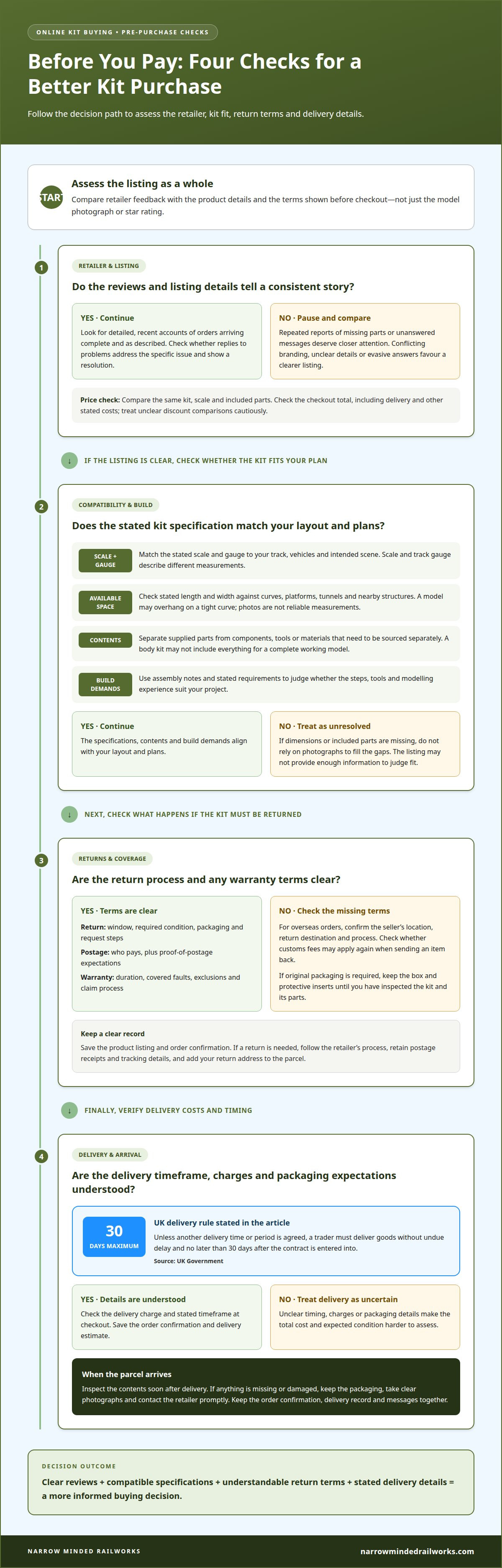
A practical way of avoiding disappointment with online kit purchases is to check retailer reviews, return terms and overseas delivery details before paying. Look for feedback about whether orders arrived as described and how problems were handled, then read the returns policy for deadlines and who pays return postage. According to the UK Government, unless another delivery time or period is agreed, a trader must deliver goods without undue delay and no later than 30 days after the contract is entered into.
It’s easy to focus on the model and overlook the terms of buying it online. Before you commit, check whether the seller’s service, returns policy and shipping arrangements suit your needs. This guide shows you how to assess reviews, understand returns terms and account for extra considerations when ordering from overseas. These checks help you make an informed choice and know what to do if the kit or delivery falls short of expectations.
Key Takeaways
- Look for consistent patterns in retailer reviews, especially comments about whether orders arrived as described and how issues were handled.
- Read the returns policy before paying, including who covers return postage and whether overseas returns could involve customs fees again.
- Compare the kit’s stated scale, contents and requirements with your layout and modelling plans before placing an order.
- Use product descriptions and photos together to understand what the kit includes, what may need to be sourced separately and whether the details meet your expectations.
1. Checking online retailers’ reviews
Before ordering, read reviews on the retailer’s site and independent review platforms. Look for detailed accounts of kits arriving as described, complete and well packaged. One complaint may be an isolated issue, but repeated reports of missing parts or unanswered messages merit closer attention. Check the dates too: recent reviews can show whether service has changed.
Notice how the retailer responds to criticism. A useful reply addresses the specific issue, such as a damaged parcel or delayed dispatch, rather than relying on generic assurances. Compare the response with the reviewer’s account and look for evidence of a resolution. Reviews that describe the order, delivery and outcome provide more context than star ratings alone.
To compare kit prices and spot misleading discounts, compare the same kit, scale and included parts across listings. Check the final checkout total, including delivery and other stated costs. Treat discount claims cautiously if the comparison price or terms are unclear. This helps you distinguish a real price difference from a difference in kit specifications.
To avoid counterfeit, unsafe or poorly made kits, check whether the seller identifies the manufacturer and whether the listing’s branding, description and photographs are consistent. Read the warnings and materials information, and inspect images of the packaging and components. If details conflict or the seller avoids straightforward questions, favour a listing with clearer information.
Reviews can also help you judge delivery reliability, but check the retailer’s stated timeframe directly. According to UK Government, legislation.gov.uk, unless another delivery time or period is agreed, the trader must deliver goods without undue delay and no later than 30 days after the contract is entered into. Save the order confirmation and delivery estimate so you can compare them with what happens.
A careful review routine helps with avoiding disappointment with online kit purchases. Consider recurring feedback alongside clear listing details and the stated delivery period. These checks help you assess the retailer before committing; then review the kit’s scale and specifications for compatibility with your layout.
2. Returns policies and overseas shipping
Read the returns policy and terms before paying. Find the return window, required condition, packaging instructions and steps for requesting a return. Check who pays return postage. If the policy requires original packaging, keep the box and protective inserts until you’ve inspected the kit and its parts.
If you return an item, follow the retailer’s instructions and keep proof of postage. For a prepaid label or seller-arranged courier, retain the receipt and tracking details. Add your return address to the parcel too, so it can be returned to you if a delivery problem prevents it reaching the retailer.
Overseas orders need an extra check. Read the seller’s policy to find out who handles return postage and whether customs fees may apply again when you send an item back. This may matter even if the kit doesn’t match its description or couldn’t be delivered. Check the seller’s location, return destination and process before ordering.
For warranties and guarantees, read the terms for the specific kit. Check how long coverage lasts, which faults it covers, what it excludes and how to make a claim. Save the product listing and order confirmation so you can refer to the description and terms that applied when you bought it.
Delivery costs, timing and packaging affect a kit’s total cost and condition. Check the delivery charge and timeframe at checkout, then consider whether the described packaging seems suitable for fragile components. If a parcel arrives damaged, keep the packaging and contact the retailer promptly with clear photographs.
Inspect the contents soon after delivery and report missing or damaged parts promptly. Keep the order confirmation, delivery record, photographs and messages together. If you need to return the kit, follow the retailer’s stated process rather than sending it without agreement. These records help you explain the issue and document how you handled the return.
3. How can I check an online kit is compatible with my needs before buying?
Start with your layout, not the product photograph. Match the kit’s stated scale and gauge to your track, vehicles and intended scene. For example, a narrow-gauge model may not suit a standard-gauge layout, even if the subject looks right. Read the seller’s terminology carefully: scale and track gauge describe different measurements.
Next, compare the kit’s dimensions with the available space on your layout. Use the stated length and width to check clearances around platforms, curves, tunnels and nearby structures. A locomotive that fits on a straight section may overhang on a tight curve. If the listing gives no dimensions, treat photographs as visual context, not reliable measurements.
Check what the kit includes and what you’ll need for the build. Look for a parts list, assembly notes and any stated requirements for extra components, tools or materials. A body kit, for example, may not include everything needed for a complete working model. Separate included parts from suggested extras before deciding whether the project suits your plans.
- Gauge and scale: compare the listing with the track and models you already own.
- Available space: check stated dimensions against curves, clearances and scenery.
- Kit contents: distinguish supplied parts from separately sourced components.
- Build demands: consider the assembly steps, tools and modelling experience involved.
Then consider how you plan to use the finished model. A display scene may allow different compromises from a model intended to run alongside existing stock. Check what the description says about assembly, movement or display, and compare those details with your purpose. Don’t infer performance from a photograph or a finished example.
Finally, note any unanswered compatibility questions before checkout. Compare the listing’s scale, gauge, dimensions and contents with your layout notes. If descriptions use different terms, establish what each means before ordering. This comparison helps you choose a kit that fits your railway and the project you want to build.
4. What should I look for in kit product descriptions, specifications and photos?
Read the full description rather than relying on the product title or main image. Identify the stated scale, gauge, dimensions, materials and intended use, then check the contents list separately. A photograph may show scenery or accessories that aren’t included, so use the written contents to understand what you’ll receive.
Look for a clear distinction between supplied parts and items needed for assembly. Check whether the listing identifies the product type, such as a body kit, wagon kit or scenery item. Note any stated tools, materials or additional components required. If the description names a component without saying whether it’s included, don’t assume a photograph proves that it is.
Use each photograph to inspect a different detail. A front view can show the overall shape, while a close-up may reveal the surface finish or small parts. Compare the images with the written description for consistent colours, components and features. If a photograph shows a completed model, check whether the listing identifies it as an example or the kit being sold.
- Written details: match scale, gauge and dimensions to the listing title.
- Kit contents: separate included components from tools or extras shown.
- Photographs: compare close-ups and overall views with the stated contents.
- Assembly: note any listed materials or steps that affect the build.
Pay close attention to the wording. “Kit”, “body” and “finished model” can describe different levels of completion. Read the surrounding text to establish what you’re buying, rather than assuming a kit arrives ready to display or run. Don’t infer a material, finish or function that the specification doesn’t state.
Before checkout, compare the title, specification and images side by side. Note any mismatch, such as an accessory shown in a photograph but absent from the contents description. Resolve discrepancies using the listing’s information before ordering. This final check helps set your expectations based on the written offer, not assumptions from photographs.
Narrow Minded Railworks: OO9 Locomotive & Wagon Kits
Narrow Minded Railworks offers OO9 Locomotive & Wagon Kits for modellers seeking narrow-gauge subjects for their layouts or projects. If your requirements differ, its range also includes GN15 Locomotive & Scenery Kits and O-16.5 / 7mm Scale Kits. Diorama Tools & Scenery can support scene-building work alongside a model railway project.
When reviewing a suitable kit, compare its scale and gauge with your plans, then read the product description and examine the images. This helps you understand what the listing describes before choosing an option. Narrow Minded Railworks’ range suits plans for a narrow-gauge build, added scenery or a diorama.
For more details, visit narrowmindedrailworks.com.
Plan Your Next Build With Confidence
A purchase is more satisfying when it supports the railway or scene you want to create, rather than becoming an impulse project. Make avoiding disappointment with online kit purchases part of your modelling routine: note the subject and build style you want to work on next. This gives each choice a clear purpose and helps keep you focused on the project you genuinely want to make.
Think beyond the next parcel, too. A carefully chosen kit can become the starting point for a larger layout idea, a new diorama or a different modelling challenge. Let your interests guide that direction, and give yourself room to develop the project at a comfortable pace. If you’re ready to explore a suitable next step, contact Narrow Minded Railworks about your next kit. Start with an idea that excites you, then enjoy making it your own.
Frequently Asked Questions
How can I verify online kit reviews are genuine and reliable?
Compare reviews on more than one platform and give detailed accounts more weight than star scores alone. Look for specific comments about the kit, such as whether small parts were present or instructions were clear. Check whether reviews are labelled as verified purchases, and read positive and negative feedback. Repeated wording or reviews posted close together may merit closer scrutiny.
What are the UK rules on returns and refunds for kit bought online?
For a change-of-mind return, start with the retailer’s written returns policy, which sets out its process, deadlines and postage arrangements. If a kit arrives damaged or differs from its description, contact the retailer promptly and explain the issue clearly. Keep your order details and photographs. The policy explains the seller’s process, while the circumstances help determine the appropriate next step.
Can I return opened or assembled kit bought online in the UK?
Opening a parcel and assembling a kit can affect whether a retailer accepts a return, so check the policy before removing parts or starting construction. Keep the packaging and avoid cutting or altering components until you’ve checked the contents. If you’ve already started assembly, describe the kit’s condition accurately when contacting the retailer and include clear photographs of the parts.
How can I check a retailer or marketplace seller is trustworthy before ordering?
Check that the seller’s name and contact details match across its shop, checkout and order information. On a marketplace, confirm which business is selling the kit and review that seller’s history, not just the platform’s overall rating. Before paying, make sure the listing clearly identifies the kit and its contents, and save a copy of the listing and order confirmation.