

You have just spent hours carefully preparing a delicate OO9 locomotive kit, only for a dull blade to slip and leave a permanent gouge in the resin. It is a common frustration that can turn a relaxing hobby into an expensive mistake. Finding the best craft knife for model making is not just about buying a sharp edge; it is about matching the right blade geometry to your specific material. While the sheer variety of blade numbers and handle types can be overwhelming, identifying the correct combination is the most effective way to protect your investment.
We understand that hand fatigue and kit damage are significant hurdles for serious modellers. This guide provides a transparent look at the professional blade systems used to achieve flawless finishes on narrow gauge and 7mm scale kits. While many builders struggle with imprecise cuts on 3D prints, selecting a dedicated scalpel or a high-end modeller's knife offers a proactive way to ensure clean results. You will learn which specific tools from brands like Swann-Morton and Tamiya are suited for resin and white metal, giving you the confidence to complete your next project with professional precision.
Key Takeaways
- Learn why standard utility knives often fail at the fine-scale detailing required for narrow gauge kits and how precision tools offer superior control.
- Identify the best craft knife for model making by comparing professional systems like Swann-Morton scalpels and X-Acto handles to see which fits your workflow.
- Discover how to select specific blade geometries, such as chisel blades for cleaning 3D prints or the classic No. 11 for general trimming on OO9 locomotive kits.
- Understand the 60-Minute Rule to maintain a safer workspace by recognizing the tactile signs of a dull blade before it ruins your model.
- Complete your workbench setup with essential pairings like self-healing mats to protect your surface while assembling GN15 or 7mm scale kits.
Beyond the Blade: Why the Best Craft Knife is a Modeller’s Most Vital Tool
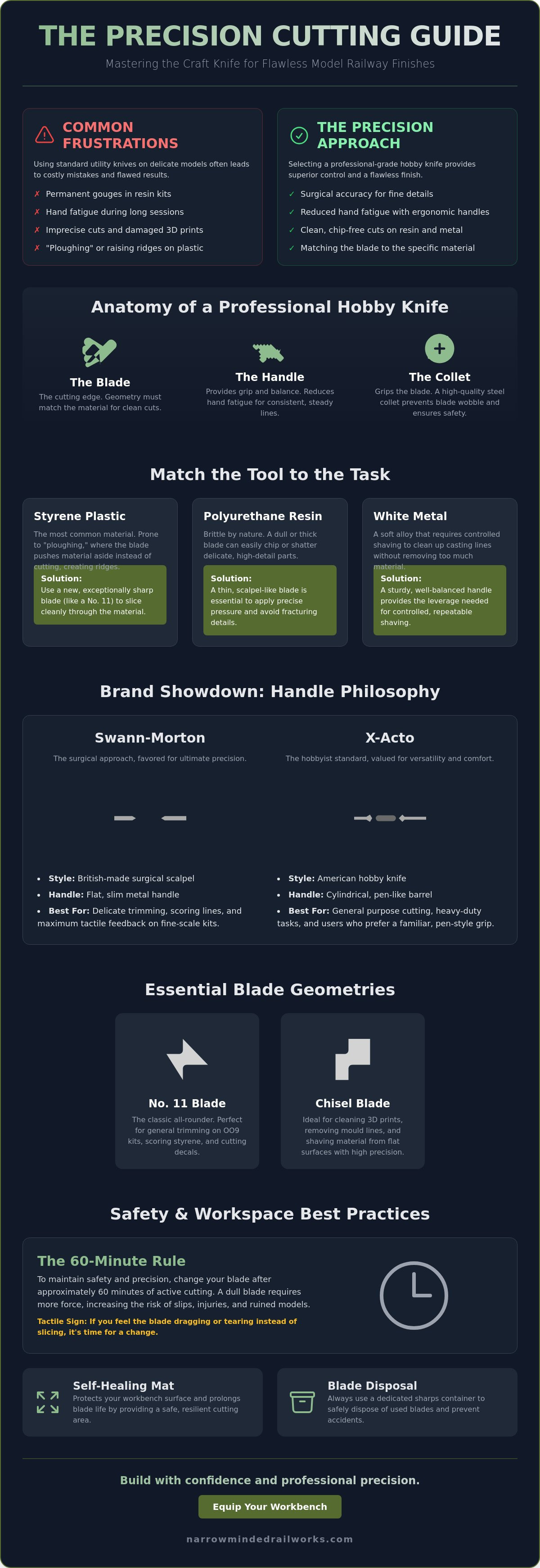
In model railway construction, a precision knife is the primary interface between the builder and the kit. It functions as the fundamental instrument for cleaning flash, scoring lines, and removing parts from sprues with surgical accuracy. While many beginners reach for a standard utility knife, these tools often fail at fine-scale detailing because their blades are too thick and their handles lack the necessary balance for micro-adjustments. Selecting the best craft knife for model making allows you to work with the high level of accuracy required for delicate OO9 or GN15 scale kits without compromising the integrity of the parts.
Modellers encounter a diverse range of materials that require specific handling:
- Styrene Plastic: Requires a sharp edge to prevent "ploughing" or creating raised ridges.
- Polyurethane Resin: Brittle by nature; needs a thin blade to avoid chipping delicate details.
- White Metal: A softer alloy that demands a sturdy handle for controlled shaving and cleaning.
To better understand how handle choice and technique impact your results, watch this helpful tutorial:
Utilizing specialized scalpel blades in handicrafts ensures the cutting edge remains thin enough to slice through these materials without causing structural fractures or deformation. A proactive approach to tool selection ensures that your workbench remains a place of creativity rather than frustration.
The Psychology of Precision
Frustration in the workshop often stems from tools that don't behave as expected. When a blade slips or drags, it is rarely a lack of skill; it's typically a mismatch between the tool and the density of the material. Precision cutting is the ability to remove material without stressing the surrounding structure. This is vital when working on delicate OO9 locomotive bodies where every millimetre counts. A sharp, reliable knife provides the tactile feedback needed to feel the grain of the material, which prevents the white stress marks that ruin a professional finish.
Anatomy of a Professional Hobby Knife
A professional hobby knife consists of three critical components: the collet, the handle, and the blade. The collet is the internal mechanism that grips the blade; a high-quality steel collet prevents the blade from wobbling or rotating during intricate cuts. While fixed-blade scalpels offer maximum rigidity for heavy-duty tasks, interchangeable hobby knives provide the versatility needed for various assembly stages. Weight and balance are not merely aesthetic preferences. For long sessions spent detailing GN15 scale models, a balanced handle reduces hand fatigue and ensures your hand stays steady for consistent, straight lines. If your current handle feels top-heavy, switching to a lightweight aluminum or ergonomic soft-grip barrel is a proactive solution that immediately improves your control.
The Great Debate: Swann-Morton vs. X-Acto and Other Leading Brands
Choosing the best craft knife for model making often begins with a choice between two distinct design philosophies. On one side, the British-made Swann-Morton system utilizes a surgical scalpel approach with flat, slim handles. On the other, the American X-Acto brand favors a cylindrical, pen-like barrel that many hobbyists find more intuitive for heavy-duty tasks. While both systems are highly effective, your choice should depend on the specific kits you build and the ergonomics that best suit your grip. If you find that a particular brand is unavailable at your local shop, a proactive solution is to order bulk blade packs online to maintain a consistent supply for your workbench.
The requirements of the hobby have evolved alongside the complexity of modern kits. As noted in Popular Mechanics' guide to model kits, the precision of your tools directly impacts the quality of the final build. This is especially true when working with mixed media, where you might switch between plastic, resin, and white metal in a single session.
Swann-Morton: The Professional’s Choice
The Swann-Morton No. 3 handle is frequently cited as the gold standard for fine-scale work. Its slim, flat profile allows for exceptional visibility when making intricate cuts. The No. 10A blade is the most popular choice for general modelling, offering a straight edge and a sharp point that excels at trimming flash from small parts. You can choose between stainless steel and carbon steel blades. While stainless steel resists corrosion in damp workshop environments, carbon steel often holds a finer edge for longer periods. This slim profile is particularly helpful when you need to reach into the tight confines of a locomotive cab to clean up interior details. Once you have mastered the scalpel, you can confidently begin assembling our range of OO9 locomotive kits, knowing your tools will provide the necessary accuracy.
X-Acto and Excel: The Versatile Workhorses
The X-Acto No. 1 handle remains a staple for many builders due to its robust construction. The cylindrical aluminum barrel provides a familiar "pen" feel that is easy to control for beginners. These handles are exceptionally strong, making them the better choice for heavier tasks like cutting through thick styrene sheets or scoring white metal. Excel Blades offers a similar system with interchangeable collets that can accept a vast range of specialized shapes, including saws and gouges. If you find the standard aluminum grip too slippery, many manufacturers now offer soft-grip versions. These ergonomic handles are a proactive solution for modellers who experience hand fatigue during long building sessions. While Olfa is often associated with rotary cutters, their specialized hobby knives with high-quality Japanese steel are also excellent for niche tasks requiring extreme durability.
Matching Blade Shapes to Model Railway Tasks: OO9 to GN15
Selecting the best craft knife for model making is only the first step toward a professional finish. The specific geometry of the blade you choose dictates how the material reacts under pressure. While many builders rely solely on the No. 11 (or 10A) blade for its versatile straight edge and fine point, specialized tasks often require a more nuanced approach. A proactive solution to achieving a clean surface involves keeping a variety of blade shapes on your workbench to handle different material densities and geometries.
- No. 11 / 10A Blade: This is the standard for general trimming and removing parts from sprues. Its sharp point is essential for piercing and starting cuts in tight corners.
- Chisel Blade: This flat-edged tool is indispensable for removing the small "pips" left behind by 3D printing supports. It allows you to shear material flush with the surface without the risk of digging into the model.
- Curved No. 10 Blade: Use this for carving organic shapes or cleaning up seam lines on figures. The curved edge, or "belly," prevents the tip from snagging, allowing for a smooth, rolling cut.
Using the correct blade shape is particularly vital when you are preparing for painting 3D printed models. Any imperfections left by a poorly chosen blade will be magnified once the primer is applied. Taking the time to select the right edge ensures your surface remains smooth and ready for detail work.
Cleaning 3D Printed Resin Kits
Resin used in OO9 and GN15 kits is often brittle. Standard slicing motions can cause micro-fractures that lead to pitting on the surface of your model. While these supports are necessary for the printing process, they are a constraint that requires a specific technique. A proactive solution is to use a "nicking" motion. By applying light pressure to the base of the support with a fresh blade, you can snap the connection cleanly. We recommend the use of a fresh blade for every new kit build to ensure safety and precision. This prevents the blade from dragging, which is the primary cause of resin chipping.
Scoring and Folding for Buildings and Wagons
Achieving perfectly square corners on GN15 scale structures requires precise scoring rather than full cuts. If you attempt to cut through thick plasticard in one pass, the blade will likely wander. A proactive approach involves using the back of a No. 11 blade against a metal safety ruler. This creates a clean V-groove that allows for a crisp fold without weakening the material. For the best craft knife for model making results on wagon kits and buildings, always make multiple light passes. This ensures the blade follows the straight edge of your ruler rather than the grain of the plastic, resulting in a cleaner assembly.
Safety, Maintenance, and the 60-Minute Rule for Razor Sharp Precision
Modellers often assume that a razor-sharp edge is the primary cause of workshop accidents. However, a slightly dull blade is significantly more dangerous than a fresh one. While any steel edge will eventually lose its keenness, adopting the 60-Minute Rule is a proactive solution to maintain safety. This rule suggests that after approximately one hour of active cutting, you should inspect your blade for signs of wear. Even the best craft knife for model making will begin to drag or tear material once the microscopic tip begins to roll. If you notice that your cuts are leaving ragged edges or that you are applying more downward pressure than usual, it is time to replace the blade.
Recognizing visual and tactile cues is essential for protecting your investment in expensive kits. A sharp blade should slice through styrene or resin with minimal resistance. If the material feels like it is "snagging" or if you see white stress marks appearing around the cut, the blade is tearing rather than slicing. While these constraints are part of working with physical tools, maintaining a supply of fresh blades ensures your work remains precise. For those looking to upgrade their entire assembly area, you can find a variety of diorama tools and scenery accessories to complement your precision cutting equipment.
The Art of the Sharp Edge
Pushing harder on a knife is a clear precursor to a slip. When a blade is dull, your hand naturally compensates by increasing force, which reduces your fine motor control. A proactive solution is to clean your blades regularly. Adhesive residue from masking tape or paint buildup can mimic the feel of a dull edge. Wiping the blade with a small amount of isopropyl alcohol often restores its performance. When the tool is not in use, always utilize a safety cap or a magnetic strip. This protects the delicate tip from chipping against other tools in your drawer, ensuring the best craft knife for model making stays ready for your next session.
Workbench Safety Protocols
Establishing a dedicated "cutting zone" on your workbench is a professional way to avoid injury. Always keep your non-cutting hand behind the path of the blade. If a knife begins to fall from your desk, never attempt to catch it. A falling knife has no handle. Let it hit the floor; it is far cheaper to replace a broken blade than to treat a deep puncture wound. Proper disposal is equally important for a safe home environment. Utilize a dedicated sharps container or a sealed plastic tin to store used blades. This prevents accidental injuries to yourself or others when emptying the bin. If you do suffer a minor hobby nick, keep a basic first aid kit nearby with antiseptic wipes and adhesive bandages to quickly address the issue and keep your workspace clean.
Equipping Your Workbench for Success with Narrow Minded Railworks
Investing in the best craft knife for model making is a significant step toward professional results, but the tool is only as effective as the environment in which it is used. A proactive solution to achieving consistent finishes is to pair your precision blades with a high-quality self-healing cutting mat. These mats protect your workbench and, more importantly, prevent your blades from dulling prematurely against hard surfaces. While space constraints might limit your permanent setup, a portable "travel kit" featuring a dedicated blade case and a small mat allows you to maintain your standards at club nights or exhibitions.
The right tools transform the experience of building OO9 locomotive kits from a challenging task into a rewarding craft. When your knife slices cleanly through resin or white metal, you can focus on the creative aspects of the build rather than struggling with material resistance. To ensure your workbench is fully equipped, follow this professional-grade checklist:
- A primary handle (Swann-Morton No. 3 or X-Acto No. 1) for general assembly.
- A dedicated chisel blade for removing 3D printing supports.
- A bulk supply of No. 11 or 10A replacement blades.
- A metal safety ruler for scoring and straight cuts.
- A sharps container for secure blade disposal.
Choosing Your First Project
While the goal may be a complex locomotive, starting with a simple wagon kit is a proactive way to practice your knife skills. This allows you to master the "nicking" technique on resin supports without the pressure of working on a complex engine body. Modellers who invest in quality tools early in their journey report higher success rates and less wasted material. If you are just starting in narrow gauge modelling, focusing on these fundamentals will build the confidence needed for more intricate 7mm scale or GN15 projects.
The Narrow Minded Railworks Difference
We design our kits with the builder's experience in mind. Our 3D printed designs are specifically optimized for easy support removal, utilizing thin attachment points that respond perfectly to a sharp hobby knife. While some resin prints can be difficult to clean, our proactive approach to design minimizes the risk of surface pitting. We invite you to Explore our latest Narrow Gauge Kits and see how the combination of professional tools and thoughtful kit design can elevate your modelling. Whether you are interested in OO9, GN15, or O-16.5 scales, our range provides the perfect canvas for your precision craftsmanship.
Master Your Next Build with Precision
Achieving a professional finish on a narrow gauge locomotive requires more than patience; it demands a technically sound workbench setup. While the vast array of blade numbers and handle types can cause confusion, selecting the best craft knife for model making is a proactive solution that prevents kit damage and reduces hand fatigue. By matching specific blade geometries to your materials and adhering to the 60-minute rule for sharpness, you ensure every cut is clean and intentional. These small adjustments in technique and tool choice protect your investment in delicate resin or white metal kits.
Now that your workbench is equipped, you can apply these skills to our specialist 3D printed designs. While sourcing unique kits can sometimes be difficult, we offer worldwide shipping and expert UK-based support to simplify your hobby. We invite you to browse our range of precision-engineered Narrow Gauge Kits and discover the difference that quality components make. Your journey from a basic kit to a detailed masterpiece starts with a single, precise cut; we look forward to seeing what you create.
Frequently Asked Questions
What is the best blade shape for general model making?
While specialized tasks may require unique shapes, the No. 11 (or 10A) blade is the most versatile option for general workshop use. Its straight cutting edge and fine point offer the precision necessary for trimming flash on OO9 or 7mm scale kits. Adopting this blade as your primary tool is a proactive solution for most assembly stages, as it handles both scoring and delicate detail work with ease.
How often should I change my craft knife blade?
While dull blades are a common cause of workshop slips, adopting a regular replacement schedule is a proactive solution. Change your blade every 60 to 90 minutes of active use, or as soon as you notice the material tearing rather than slicing. A fresh blade ensures the highest level of precision when starting a new project, such as a GN15 locomotive kit, and significantly reduces the effort required for every cut.
Is a Swann-Morton scalpel better than an X-Acto knife?
While some builders prefer the slim profile of a scalpel, others require the robust grip of a traditional hobby handle. Swann-Morton scalpels excel at reaching into tight spaces, whereas X-Acto handles provide a thicker barrel for heavy-duty scoring. Both systems are valid choices for the best craft knife for model making, and trying both handle types is a proactive way to find the grip that best suits your hand.
Can I sharpen my hobby knife blades instead of replacing them?
While carbon steel can technically be honed, the process is often inconsistent for the average modeller. Purchasing bulk replacement packs is a proactive solution that ensures you always have access to a factory-honed edge. This consistency is vital when working on the fine details of OO9 or 7mm scale kits, where a slight imperfection in a hand-sharpened blade can easily ruin a delicate resin or white metal part.
What is the safest way to dispose of used craft knife blades?
While loose blades are a hazard in any waste stream, using a dedicated disposal container is a proactive solution for workshop safety. A sharps container or a sealed metal tin prevents accidental punctures and keeps your workspace organized. Once full, the container can be safely taped and discarded, ensuring your household remains safe from discarded tools while you focus on building your next GN15 scenery project.
How do I prevent my hobby knife from rolling off the workbench?
While round handles are prone to rolling off work surfaces, choosing a tool with a hexagonal barrel or a built-in roll-stop is a proactive solution. If you already own a round handle, sliding a small rubber O-ring onto the barrel will prevent it from moving. This simple adjustment protects both the delicate blade tip from breaking and your feet from accidental injury if the tool were to fall from the desk.
Which knife handle is best for people with arthritis or hand pain?
While standard aluminum handles can be difficult to grip for long periods, ergonomic soft-grip handles are a proactive solution for modellers with hand pain. These handles feature a larger diameter and cushioned surfaces that reduce the muscle tension required to maintain control. Selecting a tool designed for comfort allows you to work on intricate wagon kits for longer sessions without experiencing the fatigue or cramping associated with thinner handles.
Do I need different knives for plastic vs 3D printed resin?
While a single handle can accommodate most tasks, switching between different blade shapes is a proactive solution for mixed-media builds. Styrene plastic responds well to the classic No. 11 blade, but 3D printed resin often requires a chisel blade for support removal. Using the best craft knife for model making means matching the edge to the material, which ensures a cleaner finish on your locomotive bodies and diorama scenery.