

Have you ever spent hours printing a fantastic model, only to have the final paint job look... disappointing? Those stubborn layer lines peeking through, the paint that refuses to stick properly, or that overwhelming feeling when faced with a wall of different primers and paints. It's a common frustration that can turn an exciting project into a source of disappointment, leaving your creation looking messy and unfinished.
But what if you could banish those imperfections for good? This guide is your complete roadmap to painting 3d printed models with confidence. We’ll demystify the entire process, taking you from the crucial prep work that makes those layer lines vanish to applying a flawless base coat. You'll discover the best tools and techniques for a professional finish and even learn simple weathering methods to add stunning realism to your creations. Get ready to transform your raw prints into pieces you’ll be proud to display.
Key Takeaways
- Master the crucial preparation steps before you even pick up a brush to prevent peeling paint and ensure a flawless foundation for your colours.
- Learn how to properly sand and prime your print to eliminate visible layer lines, creating a perfectly smooth canvas for professional results.
- The secret to successfully painting 3d printed models is mastering paint consistency; discover the golden rule for a smooth, brush-stroke-free finish.
- Elevate your model from a simple print to a realistic masterpiece with simple weathering techniques and protect your work with the correct final varnish.
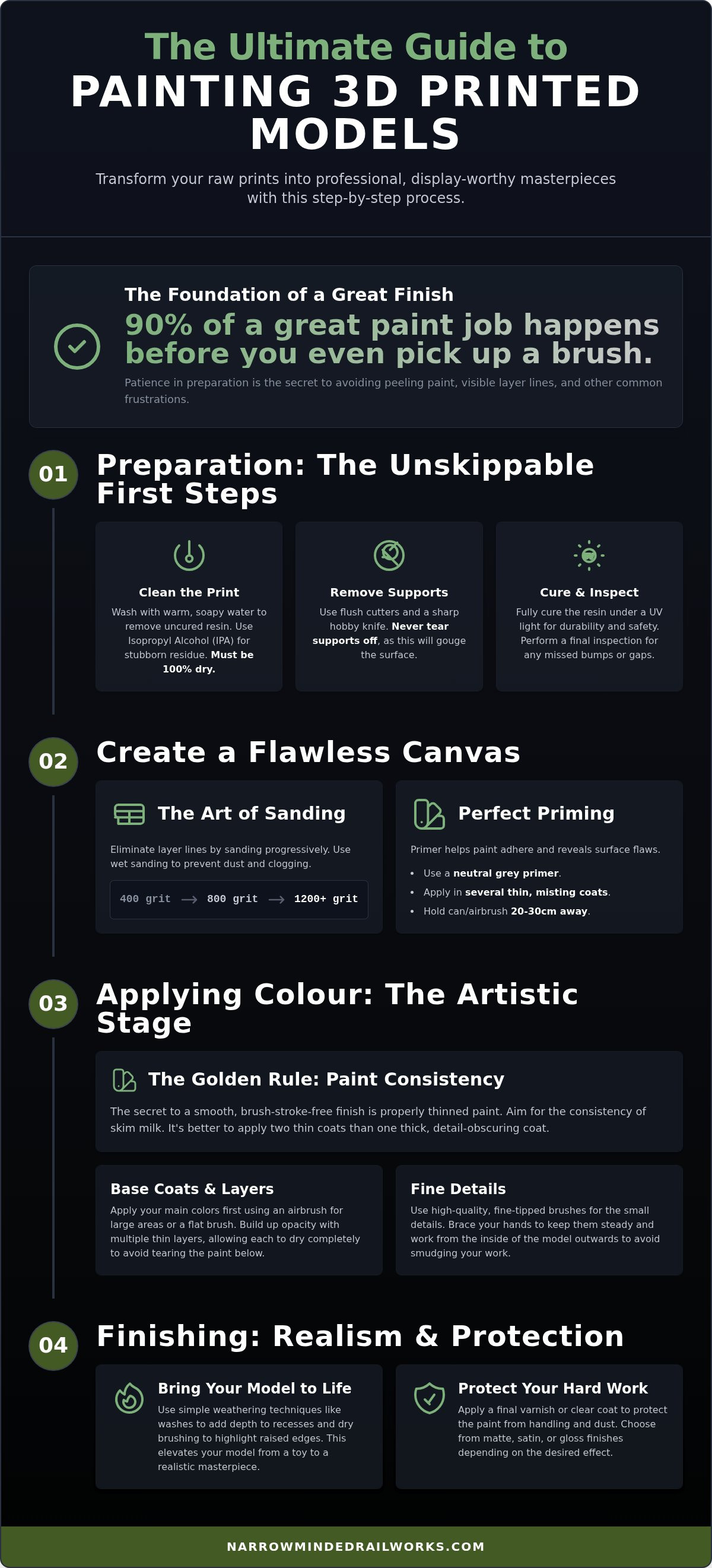
Preparation is Everything: The Unskippable First Steps
Ask any seasoned model maker, and they'll tell you the same thing: 90% of a great paint job happens before you even open a pot of paint. When it comes to painting 3d printed models, this rule is absolute. Skipping these foundational steps is a direct path to frustration, resulting in peeling paint, visible print lines, and flaws that no amount of primer can hide. A little patience now will pay off immensely in the final result.
To see the incredible finish you can achieve with proper preparation, take a look at this quick video:
Before you begin, safety is paramount. Always work in a well-ventilated area, especially when sanding resin, as the dust can be harmful. Wearing a dust mask and safety glasses is highly recommended. To get started, you'll need a few essential tools:
- Flush Cutters: For snipping away support structures.
- Hobby Knife: A sharp craft knife is crucial for precise trimming.
- Files & Sandpaper: A set of small needle files or fine-grit sandpaper (400-800 grit) for smoothing.
- Soapy Water: A simple tub of warm water with a bit of washing-up liquid and a soft-bristled brush.
Step 1: Cleaning Your Resin Print
Freshly printed resin models are often coated in a slightly greasy film of uncured resin. Paint will not adhere to this surface. Give your model a gentle bath in warm, soapy water, using a soft toothbrush to scrub it clean. For any stubborn residue, a quick wipe with Isopropyl Alcohol (IPA) works wonders. Most importantly, allow the model to dry completely before moving on; any trapped moisture will ruin your paintwork.
Step 2: Removing Support Structures
Patience is key here. Never tear supports off, as this will gouge the model's surface. Instead, use flush cutters to snip the main support scaffolding away, getting as close to the model as you can without touching it. Use a sharp hobby knife to carefully slice off the finer connection points. This careful removal is one of the most fundamental post-processing and finishing methods for a clean finish. Smooth any remaining nubs with your files or sandpaper.
Step 3: Final Inspection and Curing
Once clean and support-free, your resin print needs to be fully cured under a UV light. This step is non-negotiable, as it hardens the resin, making it durable and safe to handle. After curing, give the model one last close inspection under a bright light. Run your fingers over the surfaces to feel for any missed bumps or rough spots. Note any small gaps or pinholes that may need to be filled with modelling putty later on.
Creating a Flawless Canvas: Sanding and Priming
Before you even think about colours, the most critical step in successfully painting 3d printed models is surface preparation. 3D prints are built layer by layer, which often leaves fine, horizontal ridges known as layer lines. If left untreated, these lines will show through your paint, ruining the illusion of a solid object. Your goal is to create a glass-smooth canvas for your paint to adhere to. This is where sanding and priming become your most important tools. Primer not only helps paint stick but also acts as a diagnostic tool, revealing every tiny imperfection you might have missed.
The Art of Sanding for a Smooth Surface
Begin tackling the layer lines with a medium grit sandpaper, around 400 grit, to knock down the most prominent ridges. Work your way progressively to finer grits-like 800 and then 1200-to smooth out the scratches left by the previous paper. For a superior finish, try wet sanding: dipping your sandpaper in water prevents airborne dust and stops the paper from clogging. For intricate details and tight corners, wrap a small piece of sandpaper around a craft stick or use dedicated sanding files to maintain sharp edges.
Choosing and Applying Primer
You have two main choices for primer: aerosol "rattle" cans or airbrush-ready primers. Rattle cans from brands like Halfords are convenient and great for larger parts, while airbrush primers from model-specific brands like Vallejo offer finer control. We recommend a neutral grey primer as it makes surface flaws easy to see and provides a balanced base for any colour. Apply it in several thin, misting coats from about 20-30cm away, rather than one thick coat which can obscure details. Always allow it to dry completely as per the manufacturer's instructions.
Filling and Refining
Once your first coat of primer is dry, inspect your model under a bright light. The uniform colour will highlight any remaining imperfections like stubborn layer lines, gaps between parts, or small print defects. Use a modelling putty, such as Milliput or Tamiya Putty, to fill these areas. After the filler has fully cured, carefully sand it flush with the surrounding surface. A final, light coat of primer over the filled spots will unify the surface, leaving you with a perfect canvas ready for paint.
Choosing Your Weapon: Paints and Tools for Modelers
With your model prepped and primed, the real creative work begins. The tools and paints you choose will dramatically impact the final look of your creation. Your decision affects everything from drying time and durability to how you'll clean up afterwards. While the options can seem overwhelming, mastering the basics is straightforward and rewarding.
Acrylic vs. Enamel Paints: What's the Difference?
The two most common paints in the modelling world are acrylics and enamels. For beginners, we almost always recommend starting with acrylics. They are water-based, which means they have a low odour and you can clean your brushes with simple tap water. They also dry quickly, allowing you to apply multiple coats in a single session. Enamels are solvent-based, offering incredible durability and a longer drying time that is perfect for techniques like wet blending. However, they require mineral spirits for cleanup and proper ventilation.
Essential Brushes for Detail Work
You don't need a huge collection of brushes to achieve fantastic results. Investing in a couple of high-quality brushes is far better than buying a large, cheap set. To start, we recommend:
- A Size 0 or 1 Round Brush: This is your workhorse for fine details, edge highlighting, and painting small components with precision.
- A Small Flat Brush: Ideal for applying smooth, even base coats to larger surfaces without leaving streaks.
To make your tools last, always clean them thoroughly after use with water (for acrylics) or the appropriate thinner (for enamels) and reshape the bristles before storing them.
Is an Airbrush Worth It?
While brushes are essential, an airbrush is the key to unlocking a professional-level finish. It atomises paint, laying down ultra-thin, perfectly smooth coats that are impossible to replicate by hand. This completely eliminates brush marks and is a game-changer when painting 3d printed models, as it helps to conceal subtle layer lines. An airbrush is perfect for base coats, creating soft gradients, and applying varnish. A reliable starter set with a compressor can be found for under £100, making it a brilliant long-term investment for any serious modeler. Our highly detailed GN15 kits are perfect for airbrushing.
Applying Colour: Base Coats, Layers, and Fine Details
This is arguably the most rewarding stage, where your primed grey model begins to transform into a vibrant, realistic creation. The entire process of painting 3d printed models hinges on one golden rule: thin your paints. Whether using acrylics, enamels, or lacquers, adding a small amount of the appropriate thinner creates a smoother flow, eliminates brush strokes, and preserves the delicate surface details you've worked so hard to prepare. Always remember to work from the largest colour areas down to the smallest, and let patience be your guide-allow each layer to dry completely before moving on.
Laying Down a Solid Base Coat
Begin with the model's most dominant colour. For a steam locomotive, this would be the main body or boiler. Instead of trying to achieve full coverage in one go, apply two or three thin, even coats. Let each coat dry for at least 20-30 minutes (or as per the manufacturer's instructions). This methodical approach prevents a thick, gloopy finish that can obscure rivets, panel lines, and other fine details. Your goal is a smooth, opaque foundation for the subsequent layers of colour.
Layering Colours and Masking
Once your base coat is thoroughly cured-ideally left overnight-it's time to add the next major colours. To achieve crisp, sharp lines between sections, use a high-quality model-specific masking tape. Carefully apply the tape to mask off the base-coated areas. For our locomotive, this could be covering the main body to paint the roof or chassis in a different colour. Apply your next colour using the same thin-coat technique. For the best results, remove the masking tape before the new paint has fully hardened, pulling it away from the painted edge at a low angle.
Picking Out the Fine Details
The final touches bring your model to life. Using a fine detail brush (such as a size 0 or 00), you can now paint the smallest components like pipes, handrails, window frames, and levers. To ensure maximum precision for this intricate work, try these tips:
- Brace your hands: Rest your painting hand on your other hand or on the edge of your workbench to eliminate unsteadiness.
- Use magnification: A desk-mounted magnifying lamp is an invaluable tool, reducing eye strain and helping you see exactly where your brush is going.
- Don't overload the brush: Apply a small amount of paint to the very tip of your brush for ultimate control.
This meticulous stage of painting 3d printed models requires a steady hand and patience, but the stunning results are well worth the effort.
Bringing Your Model to Life with Weathering
Once the base coats are dry, the real magic begins. Weathering is the process of transforming your model from a pristine, toy-like object into a realistic replica that looks like it has a history and exists in a real environment. The key is subtlety; it's always easier to add more weathering than it is to take it away. This section provides a brief overview of the most common techniques to get you started.
These methods will elevate your skill in painting 3d printed models from basic to brilliant. For a deeper dive, read our Beginner's Guide to Weathering Wagons, which explores these techniques in greater detail.
Using Washes for Depth and Grime
A wash is simply very thin paint that flows via capillary action into all the recessed details of your model, such as panel lines, rivets, and crevices. As the thinner evaporates, it leaves a concentration of pigment, instantly creating shadows and simulating the natural accumulation of dirt and grime. You can buy excellent pre-made enamel or acrylic washes, or easily make your own by thinning your chosen paint with the appropriate thinner until it has the consistency of milk.
Dry Brushing for Worn Edges and Highlights
Dry brushing is the perfect technique for simulating wear and tear on raised surfaces. Load a flat-headed brush with paint (a metallic colour like silver works well for worn metal), then wipe almost all of it off on a paper towel until it barely leaves a mark. Lightly drag the brush back and forth across the raised details and sharp edges of your model. The remaining pigment will catch on these high points, perfectly replicating chipped paint and scuffed metal where it would naturally occur.
Adding Streaks and Rust Effects
To achieve the ultimate level of realism, focus on specific effects like rust and environmental streaks. This is where your model truly tells a story. You can create highly convincing effects using:
- Oil Paints: Apply a small dot of rust-coloured oil paint and use a brush dampened with white spirit to drag it downwards, creating a subtle, faded streak.
- Weathering Pencils: These offer incredible control for drawing fine scratches, chips, and rust marks directly onto the surface.
- Pigment Powders: These fine powders are brilliant for simulating accumulated dust, caked-on mud, or soot stains around exhausts and chimneys. They can be applied dry or fixed in place with a fixer.
Mastering these final touches is a rewarding part of painting 3d printed models, turning a good model into a great one. You can find a superb range of wagon and scenery kits perfect for practicing these techniques at Narrow Minded Railworks.
Protecting Your Hard Work: Applying a Varnish
After hours spent assembling, painting, and weathering, the final step is to protect your masterpiece. Applying a varnish or clear coat is non-negotiable. This crucial final layer shields the delicate paintwork from scratches, chipping, and the oils from your hands during handling. It also provides UV protection, preventing your carefully chosen colours from fading over time.
Furthermore, a varnish coat is the secret to achieving a truly professional and cohesive look. Throughout the process of painting 3d printed models, you likely used various paints (acrylics, enamels) and applied decals, each with its own distinct sheen. A final varnish unifies these different finishes into one consistent surface, whether you want a flat matt or a subtle satin.
Choosing the Right Finish: Matt, Satin, or Gloss
The final sheen has a dramatic impact on your model's appearance. A matt varnish is the go-to for most model railway subjects. It provides a completely flat, non-reflective finish that is perfect for representing weathered rolling stock, grimy industrial buildings, or any surface that shouldn't be shiny. This is the most realistic finish for the majority of prototypes.
A satin varnish offers a subtle, low-sheen lustre. This is ideal for representing a well-maintained locomotive in regular service or the gentle sheen on a passenger coach's paintwork. It suggests a clean, cared-for surface without being unrealistically glossy.
Gloss varnish should be used sparingly for specific effects. It's perfect for mimicking glass in windows, creating a wet or oily appearance on mechanical parts, or as a base coat before applying decals to prevent silvering. Applying it selectively with a brush is often more effective than coating an entire model.
How to Apply Varnish Correctly
For the most consistent and professional results, a spray application is highly recommended, either from an aerosol can or an airbrush. This method avoids brush strokes and ensures an even coating across all the fine details of your model. To achieve a flawless finish, follow these key steps:
- Preparation is Key: Ensure your model’s paint and weathering are completely dry-ideally, leave it for at least 24 hours. Gently remove any dust from the surface with a soft brush or air duster.
- Work in Light Coats: Shake the can thoroughly and apply the varnish in several very light mist coats from about 20-30cm away. A heavy coat will lead to drips, runs, and a cloudy finish.
- Patience Pays Off: Allow each light coat to dry for at least 15-20 minutes before applying the next. Build up the protective layer gradually until you are happy with the finish.
With your model now fully protected, you'll be able to handle and display it with confidence for years to come. Ready to start your next project? Browse our OO9 locomotive kits and put your new skills to the test.
Your Masterpiece Awaits: Final Touches and Next Steps
You've now journeyed through the essential stages of turning a raw 3D print into a work of art. Remember that a flawless finish always begins with meticulous preparation-sanding and priming are your best friends. From there, it's about building up colour with patient layering and adding character with weathering to truly bring your creation to life. Mastering these core techniques is the key to successfully painting 3d printed models and achieving professional-quality results every time.
The theory is one thing, but practice is where the real magic happens. Ready to put your newfound skills to the test? Our kits are the perfect canvas. Designed by modelers for modelers, each one is packed with the fine details that are perfect for painting. With worldwide shipping on all our kits, you can get started on your next masterpiece today.
Browse our full range of 3D printed model kits and start your project today!
Grab your brushes, embrace the process, and happy modelling!
Frequently Asked Questions
What is the best type of paint for 3D printed resin models?
Acrylic paints are the top choice for painting 3D printed models made from resin. Brands like Citadel, Vallejo, and Army Painter, widely available in the UK, offer excellent coverage and a vast range of colours. These water-based paints are easy to clean up, dry quickly, and adhere well to a primed surface. They can be thinned with water for smooth application with a brush or used in an airbrush for a flawless, even finish on your detailed creations.
Do I really need to use primer on my 3D prints?
Yes, using a primer is a crucial step you shouldn't skip. Primer creates a uniform surface that helps the paint adhere properly, preventing it from chipping or rubbing off easily. It also ensures your colours appear true and vibrant, as it covers the base colour of the resin or filament. In the UK, spray can primers from brands like Halfords or dedicated hobby primers from companies like Games Workshop provide an excellent base coat for your model.
How do I avoid leaving brush strokes when painting by hand?
To avoid visible brush strokes, the key is to thin your acrylic paints. Add a small amount of water or an acrylic medium to your paint on a palette until it has the consistency of semi-skimmed milk. Apply the paint in two or three thin, even coats rather than one thick one. Allow each layer to dry completely before applying the next. This technique builds up smooth, solid colour without obscuring the fine details of your 3D print.
Can I paint a 3D print without sanding it first?
While you can technically paint directly onto a primed print without sanding, it is not recommended for the best results. Sanding removes the visible layer lines and any minor imperfections from the printing process. This creates a much smoother surface, which results in a more professional and polished-looking final piece. Even a quick pass with fine-grit sandpaper (400-grit or higher) can make a significant difference to the quality of your paint job.
How long should I wait for paint to dry between coats?
For most water-based acrylics, you should wait at least 15 to 30 minutes for a thin coat to be touch-dry before applying the next. However, environmental factors like humidity and room temperature can affect drying times. For a full cure, especially before applying washes, varnishes, or masking tape, it's best to wait several hours, or even overnight if possible. This ensures the underlying layers are completely stable and won't be damaged by subsequent work.
What's the best way to clean my paint brushes?
For acrylic paints, you should clean your brushes immediately after use. First, rinse the excess paint out with running water. Then, gently work a small amount of brush soap, like 'The Masters Brush Cleaner & Preserver', into the bristles with your palm. Rinse thoroughly and reshape the brush tip before letting it dry horizontally. Never let paint dry in the bristles, as this can permanently damage the brush and make it unusable for detailed work.