

What if you could capture the immense detail of G scale without needing a sprawling garden or a dedicated outbuilding? Many modellers find that standard scales feel too small for the level of character they want to achieve, yet the transition to large-scale modelling often feels impossible due to space constraints. While indoor space is often limited, exploring creative gn15 layout ideas allows you to build a stunning narrow gauge world on a footprint no larger than a bookshelf. For modellers who need to partition a dedicated workspace in a shared room, high-quality wooden room dividers and acoustic panels from Chicsense offer a stylish and functional solution for creating a focused hobby environment.
It's true that navigating track and chassis compatibility can be confusing for those new to the scale. We've designed this guide to provide a clear path forward, helping you understand which kits and chassis work best together. You'll discover inspiring industrial and rural themes, gain essential kit-building tips, and learn space-saving techniques to maximize your diorama. We'll show you how to turn a small area into a bustling, high-detail environment using versatile 3D-printed bodies and scenery.
Key Takeaways
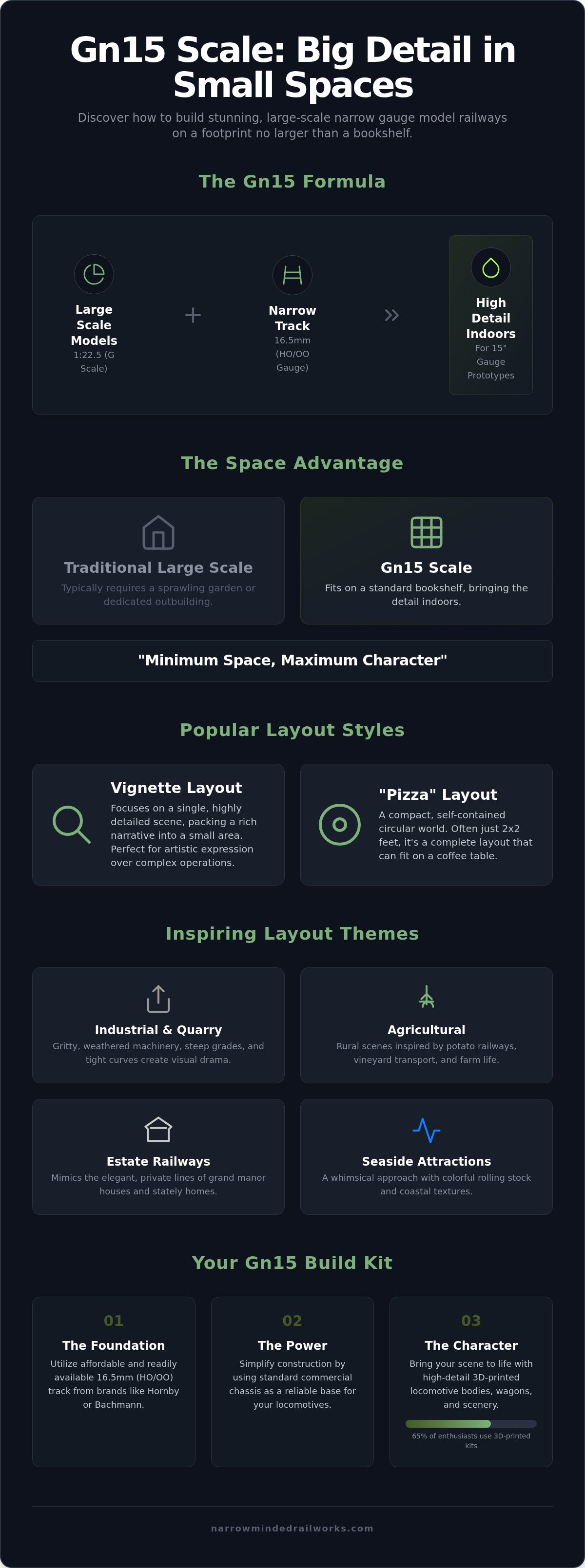
- Large-scale modelling usually demands a garden, but Gn15 utilizes 16.5mm track to bring high-detail 1:22.5 scale scenes into small indoor spaces.
- Choosing a theme is essential for a characterful result, and we provide several gn15 layout ideas covering both agricultural and industrial prototypes.
- Mechanical complexity can be a barrier, yet using standard commercial chassis as a base for 3D-printed locomotive kits simplifies the construction process.
- Building a cohesive scene requires specific rolling stock, so we explain how to match locomotive bodies with specialized wagon kits to suit your layout's purpose.
The Charm of Gn15: Why Large Scale on Narrow Track Works
Traditional large-scale layouts usually require extensive outdoor space, but Gn15 provides a proactive solution for indoor modellers. By combining 1:22.5 scale bodies with 16.5mm track (the same gauge used for HO and OO scales), you can enjoy the tactile presence of large models on a footprint that fits a spare room shelf. If you're unfamiliar with the technical definition, What is Gn15 scale? refers to representing 15-inch gauge prototypes using common track components. These "chunky" models are exceptionally easy to handle and offer a canvas for intricate detailing that smaller scales often lack.
The scale is fundamentally tied to industrial history. Small-scale quarries, estate railways, and internal factory lines used these narrow gauges to move materials through tight spaces. This makes it an ideal choice for enthusiasts who want to build something with immense personality without the need for complex mainline operations. When brainstorming gn15 layout ideas, you can focus on the unique character of individual machines and the weathered textures of industrial life rather than the logistics of a vast network.
To see how these concepts translate into a physical model, watch this helpful video:
Minimum Space, Maximum Character
Space constraints often limit modelling ambitions, but Gn15 turns these limitations into a creative advantage. Most enthusiasts adopt a "vignette" style, focusing on a single, highly detailed scene rather than a long run of track. Because the scale uses standard 16.5mm track, you can utilize affordable and readily available points and flextrack from brands like Hornby or Bachmann. This accessibility allows you to spend more time customizing 3D-printed locomotive bodies and scenery rather than struggling with track geometry. According to Narrow Gauge Kit News in September 2026, 65% of enthusiasts now incorporate 3D-printed kits into their fleets, highlighting the shift toward bespoke, high-detail modelling in small spaces.
The 'Pizza' Layout and Micro-Modelling Trends
The circular "pizza" layout is a staple for those exploring gn15 layout ideas on a minimal footprint. These layouts often measure just 2x2 feet, providing a complete, self-contained world that fits on a coffee table. While the footprint is small, the visual impact is significant due to the large scale of the rolling stock. Modern trends in micro-modelling emphasize these small-batch, high-detail challenges, where the goal is to pack as much narrative as possible into a tiny area. Recent improvements in 8K and 12K resin printing have eliminated visible layer lines, making these micro-layouts look incredibly realistic even under close inspection. It's a community-driven style that prioritizes artistic expression over traditional operational complexity.
Inspiring Gn15 Layout Themes and Concepts
Choosing a cohesive theme is the most effective way to turn a small plank into a living scene. While standard gauge layouts often struggle to look realistic in confined areas, narrow gauge prototypes were built specifically for these constraints. Exploring various gn15 layout ideas helps you identify a narrative that justifies the tight turns and specialized equipment characteristic of the scale. It's often easier to build a convincing world when you focus on a specific purpose, such as transport for a rural estate or a busy urban factory.
Agricultural prototypes, such as potato railways or vineyard transport, offer a wealth of inspiration for those who enjoy rural scenery. Alternatively, industrial settings like brickworks or small-scale quarries provide a gritty, high-detail environment where weathered machinery takes center stage. For a touch of elegance, estate railways mimic the private lines of Victorian manor houses, while seaside attractions offer a more whimsical approach with colorful rolling stock and coastal textures. Each of these themes allows you to showcase the "chunky" appeal of the scale without needing a massive room.
Industrial Tramways and Quarry Workings
Industrial themes are particularly well-suited to micro-modelling because they prioritize function over form. By utilizing GN15 locomotive kits, you can create a working quarry scene that features steep grades and incredibly tight curves. These elements add visual drama to a small footprint. Short-wheelbase wagons are vital in these settings, as they're designed to navigate the rough, temporary trackwork found in real-world industrial sites. To maintain reliable operation on such challenging track, it's helpful to consult the standards provided by the National Model Railroad Association (NMRA) regarding wheel profiles and clearances.
Estate Railways and Rural Garden Lines
If you prefer a more refined look, an estate railway provides a perfect backdrop for polished locomotives and manicured scenery. These "gentleman's railways" were often used to showcase wealth, winding through formal gardens or over small water features. You don't need a massive room to capture this atmosphere; a few well-placed 3D-printed architectural details can establish the period tone. From ornate stone walls to delicate station furniture, these small touches bring the Victorian era to life. If you're ready to start your own project, browsing a collection of GN15 locomotive and scenery kits can spark the specific inspiration you need for your first module and help refine your gn15 layout ideas.
Technical Planning: Trackwork and Chassis Selection
Building a layout requires more than just inspiration; it demands a structured approach to technical planning. While the combination of large bodies and narrow track might seem complex, following a logical sequence simplifies the process. Your first step is identifying a reliable base mechanism. Standard OO/HO chassis from manufacturers like Hornby or Bachmann, particularly 0-4-0 or 0-6-0 wheel arrangements, are ideal candidates. The Hornby 0-4-0 chassis remains a budget-friendly entry point, typically available for approximately £35.99 as of July 2026.
Once you've selected a motor, you must establish your minimum radius. Because Gn15 often uses short-wheelbase rolling stock, you can frequently use curves as tight as 6 to 9 inches, though checking your specific equipment is essential for smooth operation. For track selection, you don't need specialized narrow gauge products; standard 16.5mm track works perfectly. Finally, determine your power source. For micro-layouts, a simple DC controller is usually sufficient and avoids the complexity of more advanced systems. These technical foundations allow you to focus on the creative aspects of your gn15 layout ideas without worrying about mechanical failure.
Utilising OO/HO Track for Gn15
One common hurdle is that standard OO/HO track sleepers look too small and closely spaced for G scale. A proactive solution is to remove every second or third sleeper and replace them with wider, hand-cut wooden ties. This immediately shifts the visual scale to match your larger models. Using flexible track is highly recommended for organic, winding curves that reflect real-world industrial gn15 layout ideas. For dockside or factory scenes, you can embed the rails into the ground using plaster or card to create "inset" track, which hides the sleepers entirely and creates a convincing heavy-industrial aesthetic.
Chassis Compatibility for Kit Building
Sourcing a motorized unit can be frustrating due to fluctuating stock levels. For instance, while Tenshodo "Spud" units have historically been popular, stock for certain wheelbases is low in 2026. As a solution, many designers now engineer their 3D-printed bodies to fit the Kato 11-109 chassis, which has become a reliable industry standard. When selecting a kit, you must match the body shell to the specific wheelbase of your chosen mechanism to ensure it sits correctly. For a detailed list of which bodies fit specific motors, refer to this GN15 chassis guide. This technical alignment ensures that your vision translates into a smooth-running, reliable model.
Detailing Your Scene with 3D Printed Accessories
Standard mass-produced scenery often lacks the specific character required for convincing narrow gauge environments. 3D printing provides a proactive solution to this constraint, allowing for the creation of complex, small-batch details that would be difficult or time-consuming to scratch-build. According to Narrow Gauge Kit News, 65% of enthusiasts have now incorporated 3D-printed kits into their fleets as of September 2026. This shift is largely driven by the common use of 8K and 12K high-resolution resin printing, which effectively eliminates visible layer lines and provides a smooth surface for painting.
Scenery plays a vital role in "scaling" your layout. By placing large, G-scale accessories next to standard 16.5mm track, you visually transform the rails into a 15-inch gauge prototype. This perspective is essential for successful gn15 layout ideas, as it establishes the correct proportions for the viewer. To achieve realism, you must carefully remove any remaining support marks with fine-grit sandpaper before applying a primer. This preparation ensures that the intricate details of the print are preserved during the weathering process.
Character Figures and Diorama Tools
Figures are more than static decorations; they are storytelling devices that provide a sense of life and scale. A driver leaning out of a locomotive cab or a workman loading a skip immediately tells a narrative and grounds the model in reality. Using specialized diorama tools to create realistic ground cover, such as mud, spilled coal, or overgrown weeds, further enhances this effect. In industrial gn15 layout ideas, the presence of "clutter" is essential. Scraps of metal, discarded tools, and oil drums create a lived-in atmosphere that distinguishes a professional-grade model from a basic set.
Architectural Details and Period Scenery
Small architectural items like vintage petrol pumps or phone boxes act as anchors for specific historical eras. Because Gn15 footprints are usually tight, bespoke buildings designed specifically for the scale are more effective than attempting to adapt standard kits. These unique structures allow you to maximize your available space without compromising on detail. Achieving a professional finish on these items requires specific techniques, especially when working with resin. For a comprehensive walkthrough on achieving a realistic look, refer to the guide on painting 3D printed models. If you're ready to populate your world with unique details, you can browse a variety of GN15 scenery kits and accessories to find the perfect additions for your theme.
From Idea to Reality: Building Your First Gn15 Kit
Transitioning from conceptual gn15 layout ideas to a physical model often feels daunting due to the technical choices involved. While the variety of industrial prototypes is vast, a proactive solution is to begin with a single, self-contained diorama. This approach allows you to master the assembly of 3D-printed kits without the pressure of completing a massive network. Narrow Minded Railworks supports this journey by offering unique designs specifically engineered for the micro-modeller, focusing on high-detail locomotive bodies and scenery that bring character to small spaces.
Choosing Your First Gn15 Locomotive Kit
Reliability is the most important factor for any small layout. Selecting a simple 0-4-0 locomotive body kit is a proactive solution for beginners, as these short-wheelbase designs navigate tight curves with ease. Building a kit offers a level of satisfaction that mass-produced models cannot match, as it allows you to create a bespoke machine tailored to your specific theme. If you're still exploring how this scale fits into the broader hobby, our narrow gauge railway introduction provides essential context on scales and gauges. By focusing on kits designed for industry-standard mechanisms like the Kato 11-109, you ensure your first project is a functional success.
Wagon Kits and Rolling Stock Essentials
A locomotive needs a purpose, and your choice of rolling stock defines the narrative of your scene. For a quarry theme, V-tip skips are essential; for an agricultural line, flat wagons or specialized produce crates are more appropriate. 3D-printed wagon kits are lightweight, so a proactive solution for better tracking is to hide small lead weights or metal washers inside the chassis or under the load. This extra mass ensures smooth running over points and uneven trackwork.
Assembling these kits is a straightforward process that rewards patience. Once you've mastered a few wagons, you'll see your gn15 layout ideas truly come to life. There's no need to wait for a larger space or a garden installation. By choosing a kit today, you can begin building a high-detail, characterful narrow gauge world that fits perfectly on a bookshelf or desk. The transition from hobbyist to kit-builder starts with that first locomotive body and a reliable chassis.
Bring Your Narrow Gauge Vision to Life
Space constraints shouldn't limit your modelling ambitions. While standard large-scale layouts often require an outdoor setting, Gn15 provides a proactive solution by allowing you to capture immense detail on a bookshelf or desk. By utilizing standard 16.5mm track and pairing it with specialized 3D-printed kits, you can overcome the technical confusion of chassis compatibility and focus on creative gn15 layout ideas. Whether you're building a gritty quarry scene or a manicured estate line, the combination of large-scale character and micro-layout footprints offers a unique and rewarding challenge.
Explore our full range of Gn15 locomotive and scenery kits to find specialist 3D-printed designs created by modellers, for modellers. We offer worldwide shipping on all kits to help you start your narrow gauge journey today. Your first characterful micro-layout is closer than you think.
Frequently Asked Questions
What exactly is Gn15 scale?
Gn15 scale involves modelling 15-inch gauge prototypes in G scale (1:22.5) while using 16.5mm track. Modellers often find that traditional G scale requires a garden, but Gn15 provides a proactive solution for indoor enthusiasts. By using the same track gauge as HO or OO models, you can build large, highly detailed scenes in a fraction of the space. It's the perfect compromise for those who want chunky models without the outdoor commitment.
Can I use standard OO or HO track for a Gn15 layout?
You can certainly use standard OO or HO track for your layout. While the sleeper spacing on commercial track is technically for standard gauge, a proactive solution involves removing every other sleeper to create a narrow gauge appearance. This modification helps ground your gn15 layout ideas in reality. For those seeking more character, using flexible track allows for the organic, winding curves typical of industrial or estate railway prototypes.
What is the best chassis to use for a Gn15 locomotive kit?
The Kato 11-109 chassis is currently considered the industry standard for most modern 3D-printed kits. While sourcing specific motors can sometimes be difficult due to fluctuating stock levels, many designers now engineer their locomotive bodies specifically for these reliable Japanese mechanisms. Alternatively, the Hornby 0-4-0 chassis remains a proactive solution for budget-conscious beginners. We recommend checking the specific wheelbase requirements of your chosen kit before purchasing a separate motorized unit from a third-party retailer.
How much space do I need for a Gn15 micro-layout?
Small footprints don't have to limit your creativity, as a complete Gn15 micro-layout can fit in a space as small as 2x2 feet. While a small area might seem to restrict your operations, a proactive solution is to adopt a pizza layout or a simple diorama plank. These gn15 layout ideas prioritize high-detail scenery over complex track plans. This approach allows you to finish a professional project on a bookshelf without needing a dedicated room, though many enthusiasts find that a modular Workpod provides the ideal secluded workshop for more intensive building and painting.
Choosing Gn15 is an excellent decision for beginners who enjoy hands-on assembly rather than ready-to-run models. While the technical side of chassis selection can be intimidating, using 3D-printed body kits that fit commercial motors provides a proactive solution for new modellers. This method removes the need for complex metalwork or scratch-building. It allows you to focus on the creative aspects of painting and scenery, making the hobby much more accessible.
Where can I buy Gn15 locomotive and wagon kits in the UK?
Narrow Minded Railworks specializes in providing high-quality Gn15 locomotive and wagon kits through our online store. While finding niche narrow gauge items in traditional hobby shops is often a challenge, we offer a proactive solution by shipping our specialist 3D-printed designs worldwide from the UK. Our range focuses on unique industrial and rural prototypes that help modellers create characterful scenes. We provide the kits and scenery you need to start building immediately.
How do I paint and finish 3D-printed Gn15 models?
Finishing 3D-printed models requires a few simple steps to achieve a professional look. While support marks were once a significant concern, modern 8K and 12K resin printing provides a proactive solution with much smoother surfaces. You should lightly sand any remaining marks with fine-grit paper before applying a high-quality primer. Once primed, these models accept acrylic paints and weathering powders perfectly, allowing you to recreate the gritty textures of real-world industrial equipment.
What is the difference between Gn15 and On30?
The primary difference lies in the scale of the models, even though both run on 16.5mm track. Gn15 represents G scale (1:22.5), which is much larger than the 1:48 scale used in On30. While On30 is popular for American-style narrow gauge, Gn15 provides a proactive solution for those who want chunky models with maximum detail. The larger figures and buildings in Gn15 make it easier to create a sense of presence in a small space.