

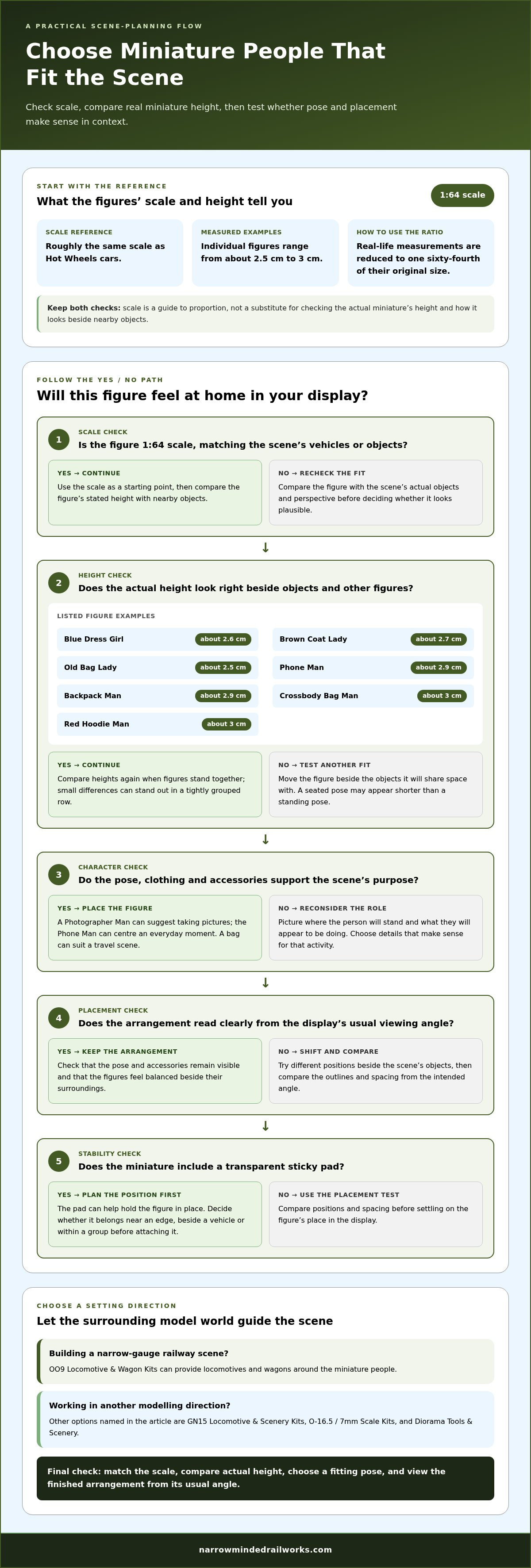
For figures and people miniatures in this range, the scale is 1:64, roughly the same scale as Hot Wheels cars. Individual figures vary in height: examples range from about 2.5 cm to 3 cm, so comparing both scale and actual height helps you judge how they’ll sit alongside other models.
It’s easy to focus first on clothing or pose, but figures & people also need to look in proportion to the surrounding scene. A miniature that works in a vehicle display may feel out of place on a railway layout or in a small diorama.
Compare figure styles, consider what scale means in practice, and choose people miniatures suited to their setting. Checking a figure’s height as well as its scale can help you choose thoughtfully, whether you’re adding one person or building a busier display.
Key Takeaways
- Choose a pose and outfit that make sense for the scene, rather than selecting by appearance alone.
- Compare a figure’s stated height with nearby objects to judge how it will look in context.
- Use scale as a guide, then consider the size and perspective of the finished display.
- Match the miniature people to the setting, whether it’s a vehicle scene, railway layout or diorama.
- For narrow-gauge layouts, explore suitable locomotive, wagon and scenery kits alongside your figures.
Figures & people
Start with the miniature’s scale, then compare its height, pose and clothing with the scene. The figures covered here are 1:64 scale, matching the scale used for Hot Wheels cars. That gives you a useful reference when planning a display with small vehicles. It doesn’t mean every figure has the same height: individual designs vary, so scale and measured height both matter.
At 1:64 scale, a real-life measurement is reduced to one sixty-fourth of its original size. Use this ratio as a guide to proportion, not as a substitute for looking at the actual miniature. For example, a standing person beside a car should feel plausible within the scene. A seated figure, by contrast, may appear shorter because of its pose.
Compare the listed heights before choosing between similar figures. The Phone Man and Backpack Man are approximately 2.9 cm tall, while the Crossbody Bag Man and Red Hoodie Man are approximately 3 cm tall. The small difference may affect how they look beside one another. It can be especially noticeable when figures stand on the same level or form a group.
Clothing and accessories help show what a person is doing. The Photographer Man suggests an activity, while the Backpack Man and Crossbody Bag Man are distinguished by their accessories. Choose details that support your scene: a phone or camera can add a focal point to a street display, while a bag may suit a travel scene.
Pose matters as much as clothing. Someone looking at a phone gives a different impression from someone carrying a camera. Before choosing a figure, picture where they’ll stand and what they’ll appear to be doing. The Photographer Man may suit a scene about taking pictures; a standing figure with a bag can suggest someone passing through.
Small height differences can change the balance of a group. The Blue Dress Girl is approximately 2.6 cm tall, the Brown Coat Lady approximately 2.7 cm, and the Old Bag Lady approximately 2.5 cm. These examples give you specific comparisons when arranging people together. A slightly shorter figure can sit naturally beside taller figures, but a tightly grouped row may make height variation more apparent.
Try a simple placement test before settling on the layout. Position figures beside the objects they’ll share space with, then view the scene from its usual angle. A person beside a small car may look different beside a larger object. Shift the figures and compare their outlines; thoughtful spacing helps keep each pose and accessory visible.
Some miniatures include a small transparent sticky pad to help hold the figure in place. It can help when arranging a display, especially when you want the scene to stay stable. Plan the position before attaching the pad: a figure near an edge, beside a vehicle or within a group may need a different placement to look balanced.
Before choosing, use this short comparison checklist:
- Match the 1:64 scale to the vehicles or other objects in the scene.
- Compare stated heights, especially when placing figures together.
- Select clothing, pose and accessories that support the scene’s purpose.
- Test the arrangement from the viewing angle used for the finished display.
For instance, a 1:64 vehicle scene could combine the Photographer Man with a figure carrying a bag, provided their positions make sense together. A display focused on everyday activity might instead centre on the Phone Man. In either case, compare the figures’ heights and poses before arranging them. Those practical choices help the finished scene read clearly without relying on accessories alone.
Narrow Minded Railworks: OO9 Locomotive & Wagon Kits
Narrow Minded Railworks offers OO9 Locomotive & Wagon Kits for modellers developing narrow-gauge railway scenes. If your miniature people need a railway setting, these kits can help you build the locomotives and wagons around them. Choose this direction when you want to create a layout with a clear narrow-gauge focus, rather than a standalone street or vehicle display.
For other modelling plans, the range also includes GN15 Locomotive & Scenery Kits, O-16.5 / 7mm Scale Kits, and Diorama Tools & Scenery. The right fit depends on the scale and setting you’re building. Pairing people with suitable scenery and rolling stock can help give a scene a coherent purpose, while the figures remain one part of the overall composition.
Explore Narrow Minded Railworks’ figure kits and scenery to find details for your model railway or diorama.
Build a Scene with a Clear Point of View
A miniature scene feels more intentional when each person has a purpose. Before adding another figure, decide what you want viewers to notice first: a railway in motion, a moment of everyday life or the character of a carefully arranged display. Let that choice guide where each person stands and how the surrounding scenery supports the scene.
If your next step is developing a railway setting, Narrow Minded Railworks offers OO9 Locomotive & Wagon Kits, GN15 Locomotive & Scenery Kits, and O-16.5 / 7mm Scale Kits. Choose the direction that suits your modelling project, then shape the scene around it. For ideas and options related to figures & people, explore the figures and people collection.
Start with one clear scene idea and build at your own pace. A thoughtful first choice makes it easier to decide where the next detail belongs.