

Could your next forum update help solve a build problem as well as show what you’ve made? Sharing build progress on forums can feel uncertain when you’re choosing a section, deciding which photos to post or explaining a tricky stage. A little structure makes the difference: show where the project stands, explain the decisions behind it and ask a focused question readers can answer.
It’s understandable to want constructive advice without letting a discussion pull your model in a direction you don’t want. This guide covers how to prepare clear updates, invite specific suggestions and keep control of your project. You’ll learn how to choose a forum section, organise photos and descriptions, frame useful questions and build a record of progress and lessons learned. Whether you’re documenting an OO9 locomotive, a wagon or a stretch of scenery, give fellow modellers enough context to follow along and respond thoughtfully.
Key Takeaways
- Start your build log before the model is finished. Early posts can capture decisions, experiments and setbacks that are easy to forget.
- Before posting, check the forum rules and decide whether your project belongs in an existing thread or a dedicated build-log section.
- Use a repeatable update structure so readers can see what changed, what’s next and why each photo matters.
- When sharing build progress on forums, ask focused questions and include enough context for members to offer relevant advice.
- Post when you reach meaningful milestones, then link back to earlier updates so returning readers can follow the project.
Why Share Model Railway Build Progress on Forums?
Your model doesn’t need to be finished before you post about it. A first update can introduce the project, show its starting point and explain what you hope to build. As work continues, the thread becomes a record of decisions, experiments, setbacks and visible changes, rather than a set of final photographs without context.
A forum thread is an ongoing conversation on an online discussion platform. A build log uses that format to follow a project over time. It differs from a showcase post, which presents a completed model, and from a troubleshooting request, which focuses on an immediate problem. Sharing build progress on forums works best when readers can see the context, understand what you’re asking and take part in a considerate discussion.
This video follows a model railway project through the challenges of taking on a substantial build:
What makes a forum build log worth following?
Dated updates help readers understand what changed between modelling sessions and why. A short note such as “test-fitted the wagon body, then adjusted its position before assembly” can explain more than a close-up alone. For a narrow-gauge locomotive, wagon or scenery project, record the stage, the choice you made and any question it raised. Those details give later photographs meaning and help you retrace your decisions if the build takes an unexpected turn.
Is an unfinished model ready to share?
Yes. Share a meaningful milestone, such as beginning assembly, testing how parts fit or starting a scenery section. Early posts establish the project’s scale, aim and current condition before questions arise later. Be clear about what’s complete, what’s still in progress and what you plan to tackle next. Readers can then follow the work without mistaking an unfinished stage for the intended result.
Keep expectations realistic: a post can invite useful discussion, but clear context and a specific question make replies more relevant. Explain the issue you’re considering and what you’ve already tried, then weigh suggestions against your own plans. Read the forum’s rules, stay courteous and acknowledge helpful replies. A build log should support your project, not oblige you to adopt every recommendation or post on a fixed schedule.
Prepare a Clear Build-Progress Post Before You Publish
A little preparation helps forum members understand your project from the first post. Follow a simple sequence: choose a suitable forum, read its posting rules, plan your introduction, then prepare photographs that show the current stage. This makes sharing build progress on forums clearer for readers and easier for you to continue later.
A build log is a dated record of a project’s progress and the decisions made along the way. Treat your opening post as the starting point for that record: identify the model or subject, its scale, where the build stands and the direction you intend to take. For example, an OO9 wagon project might begin with the kit ready for assembly, with a test fit as the next step.
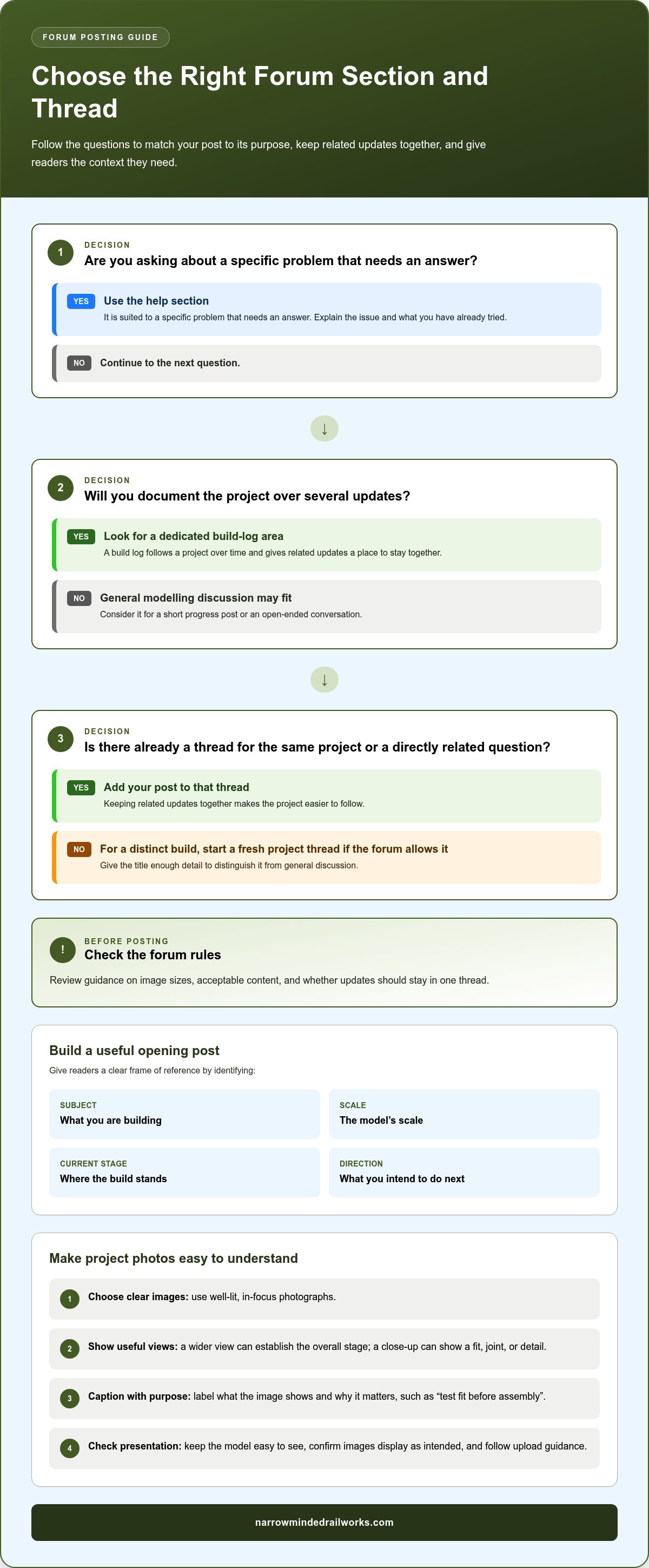
Choose the right forum section and thread format
Look for a dedicated build-log area if you want to document a project over several updates. General modelling discussion may suit a short progress post or an open-ended conversation, while a help section is better for a specific problem that needs an answer. Read the forum’s rules before posting, including guidance on image sizes, acceptable content and whether updates should stay in one thread.
Search for an existing thread before starting a new one. Add to it if it already follows the same project or directly relates to your question. Start a fresh project thread when you’re documenting a distinct build and the forum allows it. Give the title enough detail to distinguish it from general discussion. Keeping related updates together makes the project easier to follow.
Gather project details and photographs
Before writing, note the subject, scale, current stage and immediate goal. These details give readers a useful frame of reference without making them guess what they’re seeing. Then choose clear, well-lit, in-focus photographs that show relevant angles: a wider view can establish the overall stage, while a close-up can show a fit, joint or detail you’re discussing.
Use a short caption or clear label for each image so readers know what it shows and why it matters. A photo of a locomotive body, for instance, could be labelled “test fit before assembly” rather than simply “progress”. Where practical, move unrelated tools or materials out of the background so the model remains easy to see. Check that the images display as intended and follow the forum’s upload guidance.
If you’re choosing a subject for your next log, browse narrow-gauge locomotive and scenery kits and consider which project you’d enjoy documenting stage by stage.
Write Updates That Make Your Model Build Easy to Follow
A consistent format helps readers understand what has changed since your last post, even if they join the thread partway through. Keep the update focused on four points: what you worked on, what went well, what remains difficult and what you plan to do next. You don’t need to write a full workshop diary. A few precise details give the build a clear thread of progress.
How should a progress update be structured?
Open with a date or milestone, followed by a plain-language summary. Then separate finished work, current challenges and next steps, using short paragraphs or a simple list. This makes the post easier to scan and helps members respond to the part that needs attention. If you use specialist terms, add a brief explanation when it will help readers understand the issue.
- Completed: What changed or was finished?
- In progress: What are you working through now?
- Next: What do you plan to try or complete?
Be honest about difficulties without treating them as failures. A fit that needs adjustment, or a finish that didn’t turn out as expected, is useful information. Explain what happened and what you learned; members can then follow the reasoning behind your next choice. That context is part of what makes sharing build progress on forums useful to both the builder and the people following along.
Sample mini-update: “Tuesday’s session: I test-fitted the OO9 locomotive body and adjusted its position before continuing. The fit is now closer, but one side still needs attention. Next, I’ll check it again before moving on to the finish.” This gives readers a milestone, result, challenge and next action without implying that every stage went perfectly.
How do photographs and captions improve a build thread?
Use an overview to establish the model’s current stage, then add a close-up if a particular fit, joint or finish needs attention. Each caption should identify the feature shown and connect it to a change, decision or question. For example, “Body after the second test fit, checking alignment before the next step” tells readers more than “Latest progress”.
Photographs can show shape and placement, but they can’t always explain process or scale. Add relevant context in the text when members need it to assess your approach. Describe the material or method involved, and include measurements if they matter to the question. Don’t make readers infer details that could change the advice they give.
Over time, this repeatable pattern turns individual posts into a practical account of what you tried and why. It gives returning readers a clear route from one stage to the next, while leaving room for useful discussion as the model develops.
Ask for Constructive Feedback and Handle Forum Replies Well
A focused question gives other modellers something specific to respond to. Instead of asking, “What do you think?”, identify the decision you’re trying to make, explain what you’ve considered and say what kind of input would help. For example, if you’re unsure how to approach a fit issue on a narrow-gauge wagon, describe where the parts meet and what you’ve tried so far. Members can then respond to the actual problem rather than guess at your aim.
How can you ask a useful modelling question?
Give readers enough context to understand the issue, even if they haven’t followed every earlier update. Briefly name the model or part, explain the current stage and include relevant details such as the material or method if they affect the answer. Add a clear close-up or overview where useful, and state the exact choice or obstacle. If you have options in mind, outline them so replies can address the trade-offs.
Keep separate problems in separate questions. A post that asks about fit, paint and scenery at once can be difficult to answer clearly. Prioritise the issue holding up your next step, then raise unrelated questions when they become relevant. This makes sharing build progress on forums a more productive exchange, rather than an open-ended request for members to solve the whole project.
How should you respond to praise, critique, or silence?
Thank people for useful suggestions, and let them know whether you plan to test or adopt an idea. If a recommendation doesn’t suit your approach, explain your reasoning calmly and keep the conversation centred on the model. Disagreement can still be constructive when you recognise the other person’s perspective without feeling obliged to follow it. Feedback is information for you to assess, not an instruction to change the build.
Praise deserves a courteous acknowledgement too. It helps maintain a welcoming thread and makes it easier for others to contribute. If replies differ, ask a clarifying question or explain the constraint guiding your choice, such as the look you’re aiming for or the stage you’ve reached.
Sometimes a post receives little attention. That doesn’t necessarily mean the project or question lacks value. Check whether the issue is clear, add context that may be missing, or bring the thread up to date with a useful progress note and a more focused question. Avoid repeating the same broad request; make it easier for someone to offer a practical answer.
Thinking about a project to document? Explore narrow-gauge locomotive and wagon kits as possible subjects for a build log, and use each milestone to invite feedback that supports your own plans.
Keep Your Forum Build Log Useful from First Post to Finished Model
A build thread stays useful when it reflects the project’s actual pace. You don’t need to post after every modelling session or follow a fixed timetable. Share an update when you reach a milestone, make a decision worth recording, encounter a question or change direction. Clear, relevant posts matter more than frequent ones, and a pause in the build doesn’t invalidate the log.
How often should you update a build thread?
Choose a rhythm you can maintain, then adjust it as the work changes. A small locomotive build may have several distinct stages to document; scenery work might progress more gradually. If the project pauses, say so briefly when you return, then explain what has changed. Link back to the relevant earlier post or recap the last milestone so readers don’t need to search through the whole thread to catch up.
Keep new updates connected to previous choices. If you’ve changed an approach after testing it, explain what prompted the change and what you’ll do next. That continuity helps members understand the build’s direction and makes the thread a more reliable record than a series of disconnected snapshots. It also helps you recall why you made a decision if you revisit it later.
How can you make a project thread useful after completion?
When the model is finished, add a closing post that brings the story together. Include a final photograph, summarise the key stages and decisions, and note what you learned. Be straightforward about any details still to complete, such as finishing a small section of scenery or making a final adjustment. A clear ending gives readers a satisfying conclusion without suggesting every project has to reach the same standard of completion.
A concise wrap-up might cover:
- Final result: What the model looks like and which parts of the original plan were completed.
- Key decisions: Any changes in method or direction, and what you learned from them.
- Remaining work: Details left unfinished, if any, and whether you intend to return to them.
If the thread has covered an OO9 locomotive, a final note on the choices that shaped the build may help someone planning a similar project. If you’re new to OO9, compare the project’s scale, subject and chassis requirements before choosing a kit.
Over time, sharing build progress on forums can leave you with more than a finished model: it creates a practical record of the work behind it. If you’re choosing a future subject, explore Narrow Minded Railworks’ narrow-gauge locomotive, wagon and scenery kits for ideas you can document from the first stage to the final update.
Start Your Next Build Log with Confidence
A useful forum build log doesn’t need polished results or constant updates. Start with the project’s current stage, record the decisions that shape it and share progress when there’s something meaningful to show. Clear captions and focused questions help members follow your work and offer practical feedback, while the final post preserves what you learned along the way.
With a simple approach, sharing build progress on forums can make each modelling milestone easier to reflect on and more rewarding to share. Your thread becomes a record of the build, not just its finished appearance.
Looking for a subject for your next project? Explore narrow-gauge model kits and accessories, including locomotive, wagon and scenery kits for modellers working in scales such as OO9 and GN15. Choose a project that interests you, take the first step and let your build log grow with it.
Frequently Asked Questions
How do I start sharing build progress on forums?
Choose a forum section that suits an ongoing model project, then read its posting rules before starting a thread. Introduce the model or kit, its scale, the stage you’ve reached and what you hope to build next. Add a clear update and relevant photographs, then keep later posts in the same thread if that’s the forum’s preferred format. A simple, honest first post is enough to begin.
Is it okay to post photos of an unfinished model railway project?
Yes, an unfinished model is suitable for a progress post. A test fit, partly assembled locomotive or early scenery stage can help readers understand the project before it’s complete. Explain what the photo shows and distinguish finished work from parts still in progress. If you’re asking for advice, include the specific detail you want members to consider. You don’t need to wait for a polished result.
What should I include in a model railway build log?
Include the project subject, scale, current stage and the purpose of each update. Note what changed, what worked, any problem you’re addressing and what you plan to do next. Pair photographs with captions that identify the relevant feature or construction stage. For example, a wagon update might record a test fit and explain what you’re checking. These details help readers follow the build and understand your decisions.
How often should I update a forum build thread?
Post when there’s a meaningful change, completed stage or question to document. You don’t need to update after every modelling session or commit to a rigid schedule. A clear update at a useful milestone is more valuable than a post with no new context. If work pauses, that’s fine; when you return, briefly recap the last stage and explain what you’re doing next.
How do I ask for useful feedback on a model railway forum?
Ask one focused question and explain the decision or obstacle you’re facing. Include the model’s relevant stage, what you’ve already tried and any options you’re weighing up. Add a photograph or details such as materials or measurements if they affect the answer. For instance, describe the specific area of a locomotive body you’re assessing rather than asking for general opinions about the whole build. Thank contributors and decide which advice fits your project.
Can I share a build log if I am using a kit for the first time?
Yes, a first kit build can make a useful log. State that you’re new to the process, identify the kit or model subject and describe each stage in your own words. Record what you found straightforward, where you paused and what you learned as you worked. You don’t need expert terminology or a perfect result. Clear questions and honest updates give other members a useful way to follow your progress.
What should I do if nobody replies to my progress post?
Give members time to see the post, then check whether your question is clear and specific. Add missing context, such as the stage of the build or the decision you’re considering, and include a relevant detail if it would help others respond. You could also add a useful progress update to bring the thread back into view. A quiet response doesn’t mean the project isn’t worth documenting.