

What if a little time away from your phone left you with something you could see taking shape? If leisure time keeps disappearing into scrolling and notifications, model building to escape digital life offers a practical alternative: a hands-on activity with a clear, physical focus. It won’t solve every frustration of being online, but it can give some of your free time a different rhythm.
Starting can feel daunting when you’re unsure what to choose, how much experience you need or where the hobby fits into a busy week. You don’t need to turn model making into another obligation. Choose a small project, break it into clear tasks and work at your own pace. That makes it easier to get started and enjoy steady progress without aiming for perfection.
This article looks at how focused making differs from passive screen time, how to choose a manageable first project and how to build a realistic routine around it. Narrow-gauge railway kits, scenery and diorama details offer one way to create something tangible, one step at a time.
Key Takeaways
- Model building offers a focused alternative to passive scrolling, with small actions that create visible progress.
- Explore how model building to escape digital life can fit into your routine without becoming another obligation.
- Choose a first task that feels manageable, from sorting parts to assembling a section or adding a scenery detail.
- Compare model making with other screen-free activities to find the kind of engagement and flexibility that suits you.
- Plan for interruptions, limited space and unfinished work by treating each session as time to enjoy, not a productivity target.
Why Model Building Can Feel Like a Welcome Break from Digital Life
Model building means assembling parts, adding detail or creating a miniature scene. A narrow-gauge locomotive, wagon or small stretch of scenery gives your attention a physical subject: parts to sort, decisions to make and details to shape. The goal doesn’t have to be a finished display. Choosing one small task and seeing it through can be satisfying in its own right.
Model building is an intentional pause from screens, not a rejection of technology. That distinction matters if you want to try model building to escape digital life without expecting a hobby to fix every frustration of being online. The overview of model building shows how the hobby spans different subjects and approaches, so it needn’t mean taking on one particular kind of project.
A short video on setting boundaries with digital devices offers another perspective on making room for offline time:
What makes a hands-on hobby different from scrolling?
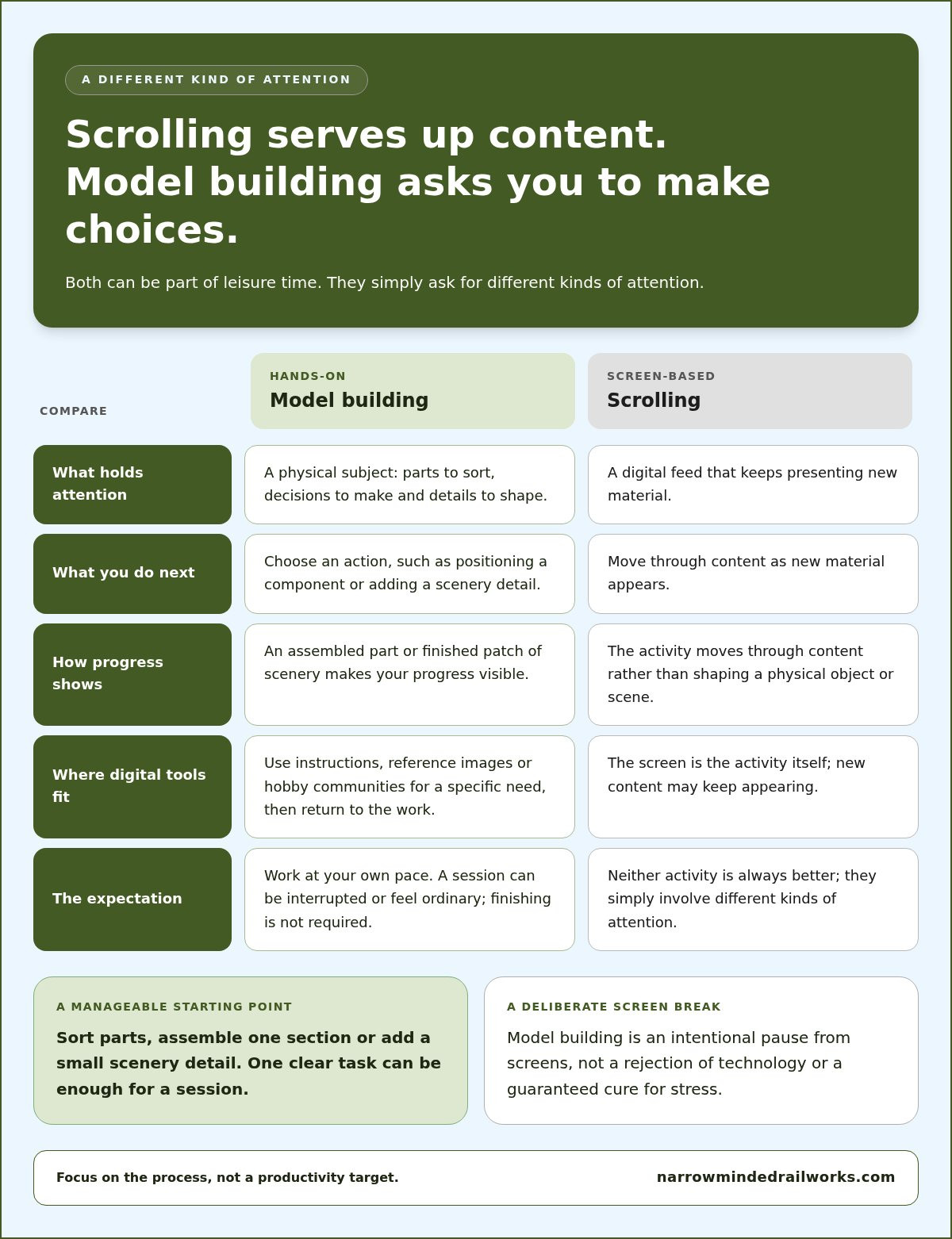
A digital feed keeps presenting new material, while making something asks you to choose what to do next. You might sort parts, position a component or add a small scenery detail. That active choice changes the nature of the break: instead of moving through content, you’re shaping an object or scene. Neither activity is always better; they simply ask for different kinds of attention.
Physical progress is easy to see. An assembled part or completed patch of scenery shows you where you left off and what you might do next. Online instructions, reference images and hobby communities can still be useful. Search for a specific answer, then return to the workbench rather than letting research turn into another endless feed.
Does model building have to mean a complete digital detox?
No. Phones and computers can help you find instructions, check a reference or share a project. Use them deliberately: open what you need, silence nonessential notifications if that suits you, and decide on your next making task. You can still respond to important messages or adapt your session when life interrupts.
People experience hobbies differently, so model making isn’t a guaranteed cure for stress or a substitute for other support. Some sessions may feel absorbing; others may be interrupted or simply ordinary. Treat the activity as one way to spend leisure time with your hands and attention. Let enjoyment come from the process rather than expecting a particular result.
How Model Building Encourages Focus Through Small, Visible Steps
A model railway project can seem like one large undertaking until you split it into smaller choices: prepare the work surface, sort the parts, assemble a section, then decide whether to paint or add detail. Each stage offers a clear next action. Model building to escape digital life can begin with one manageable task, not a commitment to finish everything.
Breaking a project into preparation, assembly, painting and detailing creates visible checkpoints, making it easier to notice what has changed and choose where to pause. You could spend one session organising pieces and another working on a single part. When time is limited, choose one task and stop at a natural point instead of rushing to finish the model.
Why small project stages can make it easier to begin
You don’t need a long, uninterrupted stretch of time to get started. Clear a small area, read the instructions or sort parts for the next step. Once you’ve chosen a task, work on it for as long as your schedule allows and leave the rest for later. Finishing an assembly stage or tidying the workspace gives you a natural checkpoint and makes it easier to pick up again.
Set your own pace. Concentration may come easily one day and feel scattered the next, so there’s no need to measure a session by how much you finish. A project can progress slowly and still reflect your choices and effort.
The satisfaction of making a miniature world
Assembly is only one part of the creative work. Buildings, wagons, figures and scenery can turn individual pieces into a scene with its own character. You decide where details belong, what the setting should suggest and which elements deserve attention. Narrow-gauge railway kits, scenery and diorama tools offer one route into miniature making, whether you focus on a locomotive or build out the surrounding scene.
Small details invite patience and observation. Consider how buildings, figures and scenery sit together, then choose one detail to work on. The result gives you something concrete to appreciate, though the experience varies from person to person. Discover Magazine discusses the psychological benefits of hobbies, but any personal sense of focus or enjoyment is individual, not guaranteed.
If miniature railway modelling appeals to you, explore narrow-gauge kits and scenery as possible starting points for a project you can approach at your own pace.
Model Building Compared with Other Screen-Free Ways to Unwind
Model building is one of several ways to spend time offline, and each activity offers a different kind of engagement. Reading draws your attention to a story or subject; drawing invites you to make marks and images; puzzles centre on finding how pieces fit. Gardening involves movement and contact with a changing outdoor space. Model making combines practical assembly with creative choices and can result in a miniature scene you can revisit.
The comparison below is a guide, not a ranking. Setup and results depend on the activity, your space and the project you choose.
| Activity | Setup | Type of engagement | Visible progress | Flexibility |
|---|---|---|---|---|
| Model building | Work surface and project materials | Hands-on assembly and creative detailing | Parts, features or a scene take shape | Can be divided into stages, though materials may need storing |
| Reading | Book or other reading material | Following ideas, information or a narrative | Pages read or a section completed | Easy to pause and resume |
| Drawing | Paper and drawing materials | Observing and making images | Marks and shapes build into a picture | Often easy to adapt to a short session |
| Puzzles | Puzzle and a place to lay it out | Searching for patterns and connections | Pieces fit together over time | Depends on whether the puzzle can stay set up |
| Gardening | Suitable outdoor space and tools | Physical tasks and care for plants | Changes appear in the space and plants | Shaped by weather, space and ongoing care |
The best fit depends on what interests you, how much room you have and whether you want a quiet task, movement or a detailed project. Model building to escape digital life doesn’t need to replace reading, drawing or gardening. It can be another option for offline leisure.
Who might enjoy model building more than a quick, casual activity?
You may enjoy model making if you like handling detailed objects, making design choices and watching a scene develop over time. A completed locomotive isn’t the only possible goal: buildings, wagons and scenery can each become part of a personal miniature setting. You don’t need prior modelling experience or a particular level of patience to begin. Choose a task that suits the time and attention you have that day.
How to tell whether a model project fits your routine
Think about where you could work, where you’d store the materials and whether you can leave a small workspace set up or need to clear it after each session. Consider how likely interruptions are, too. If you’d rather be moving or want almost no setup, a walk or a few pages of a book may suit you better at that moment. Choose an activity because it interests you, not because every spare minute needs to be productive.
How to Start Model Building Without Letting It Become Another Screen Project
A hobby can lose its appeal if choosing a project turns into hours of browsing and comparison. Keep the first steps simple: pick a subject you’d genuinely like to see take shape, prepare a small workspace and decide on one task to begin. The point of model building to escape digital life is to make room for hands-on time, not create another project to manage online.
Match the project to your interests and available time. A locomotive, wagon, building or small section of scenery can each give you a clear focus. You don’t need to plan an entire layout before starting. If railway modelling interests you, this beginner’s guide to narrow-gauge railways can help you understand the subject before choosing a direction.
Choose a first project that feels inviting, not intimidating
Start with the miniature you most want to work on, rather than the one you think looks most impressive. A defined first task, such as laying out parts or assembling one section, is easier to plan and gives you a natural place to pause. If you’re considering OO9 modelling, read this optional beginner’s guide to choosing an OO9 locomotive kit for more context.
Before you begin, clear enough space to work comfortably and decide where materials will go when you stop. A small tray can keep frequently used items together, especially if you need to clear the work surface between sessions. You don’t need a dedicated hobby room; a practical, repeatable setup is more useful than waiting for ideal conditions.
Create a simple routine that protects hands-on time
Choose a session length that fits your day, then decide what you’ll do during it. You might prepare parts, work on an assembly step or add one scenery detail. Silence or put away nonessential notifications if that helps limit interruptions, but keep the routine flexible enough for everyday life.
A simple start cue can make it easier to begin: set out the next task before you finish, so it’s ready when you return. Online instructions and reference images can help, but give yourself a specific question to answer. Then close the browser or put the phone aside and continue at the workbench. If you’re ready to explore a hands-on railway project, browse narrow-gauge kits and scenery for ideas that suit your interests.
Make Model Building a Sustainable Offline Ritual
A lasting hobby doesn’t need a strict schedule or a finished model at the end of every session. Treat model building to escape digital life as an invitation to make time for something tangible, not another target to meet. Some days you may work on a project; on others, interruptions or competing priorities may leave it untouched. Both are normal.
Keep the hobby enjoyable when progress slows
An unfinished project isn’t a failure. Return to it when time or interest allows, even if the next session is brief. Instead of comparing your work with polished online showcases, choose a personal goal, such as completing an assembly step or adding a single detail. Before packing away, note the next small task. That can make restarting easier and save you from having to work out where you left off.
Use a tray or box to keep materials together if space is limited. If interruptions are common, stop at a sensible point and keep the instructions nearby. When concentration varies, adjust the task instead of forcing a long session. The hobby should fit around everyday life, not compete with it.
Explore model railway kits as one way to begin
Model railway kits offer different kinds of hands-on project: you might assemble a locomotive or wagon, or work with scenery to build out a miniature setting. These are options, not requirements. Model making can take many forms, and no project guarantees a particular mood or result. If you’re interested in finishing techniques, this guide to building and finishing 3D-printed model kits offers a useful next read.
For a simple first step, choose a subject that appeals to you, clear a small space and decide what you’ll do first. Then make room for that task in your routine when it feels practical, without requiring yourself to make progress every time. Narrow-gauge locomotive and wagon kits, scenery kits and diorama details can all offer a starting point for exploring miniature railway modelling at your own pace.
If you’d like to see what these projects can involve, explore model railway kits and scenery and consider which subject you’d most enjoy bringing to life.
Make Room for a Little Offline Focus
Model building to escape digital life doesn’t require abandoning technology or finishing a project in one sitting. It can mean choosing one hands-on task, putting away nonessential notifications and giving yourself permission to pause when life interrupts. Small, visible steps make progress tangible. A good routine is one that feels enjoyable rather than compulsory.
There’s no single best screen-free hobby. Consider what interests you, how much space you have and whether you’d enjoy assembling a model or creating a detailed scene. Narrow Minded Railworks designs and sells model railway kits and accessories for narrow-gauge modelling, including locomotive, wagon, building, scenery and diorama-related items. Its range serves railway enthusiasts worldwide.
If miniature railway modelling sounds like a welcome addition to your leisure time, explore model railway kits and scenery. Choose a subject that appeals to you and start with one manageable task. A little progress, made at your own pace, is a worthwhile place to begin.
Frequently Asked Questions
Can model building help me spend less time on my phone?
It can give you a practical reason to put your phone aside for a while, though it won’t automatically change your screen habits. Choose a defined task, such as sorting parts or adding a detail, and silence nonessential notifications if that helps. Use your phone deliberately for instructions or reference images, then return to the workbench. The aim is to make space for an offline activity, not to avoid technology completely.
Is model building a good hobby for beginners with no experience?
Yes. You don’t need previous modelling experience to try a first project. Begin with a subject that interests you and break the work into clear steps instead of expecting to complete a finished scene straight away. Model railway projects can involve assembling locomotive or wagon kits, or adding buildings and scenery. Read the instructions before starting so you understand the process and can prepare the workspace and materials the project calls for.
How much time do you need for a model-building session?
There’s no set session length. Choose a task that fits the time and attention you have, whether that’s preparing the work surface, organising parts or working on one stage of assembly. Set a natural stopping point so you can pause without rushing to finish. If interruptions are likely, note your next step before putting the project away. A short session can still suit your day.
What do you need to start building model railway kits?
You’ll need a model railway kit, a clear place to work, and the instructions and tools or materials required for that project. Requirements vary, so use the kit guidance to prepare rather than assuming every build uses the same equipment. Some locomotive body kits are designed to fit commercially available chassis, so include the project’s chassis requirements in your planning. Keep small parts organised and store them safely between sessions.
Can you enjoy model building if you have limited space?
Yes. A compact, temporary work area can be enough for a small task, provided you have room to handle parts safely. A tray or storage box can keep project materials together and make it easier to clear a shared table after working. Before starting, decide where the project will go between sessions. You can approach scenery or diorama work as separate details rather than one large layout.
Is model building an expensive hobby to start?
The cost depends on the project and on which tools or materials you already have, so there isn’t one figure that applies to every beginner. To keep your first attempt manageable, focus on one subject rather than planning a large layout, and review the project instructions before buying additional supplies. You may already have suitable tools, but use them only if they match the task and its requirements.
What happens if I start a model project but do not finish it?
An unfinished project is simply one you can return to if and when it suits you. Store the parts and instructions together, and write down the next small task before packing everything away. That note can make restarting easier after a busy period. You can also change your goal: completing one detail or enjoying a single stage may be more satisfying than treating a finished model as the only worthwhile outcome.