

You’ve meticulously laid the track, your quirky locos trundle along beautifully, but does your GN15 layout still feel a little… empty? It’s a common challenge; transforming a simple baseboard into a world brimming with character can feel daunting, especially when the distinctive, narrow-gauge aesthetic makes finding the right structures difficult. This is where the transformative power of high-quality gn15 scenery kits comes into play. They are the essential building blocks for creating a truly believable and captivating miniature world, turning a simple train set into a work of art.
If you've ever felt unsure what scenery is appropriate, or how to turn a plain resin casting into a weathered, story-rich masterpiece, you're in the right place. In this guide, we'll demystify the entire process. We will explore inspirational ideas for choosing the perfect kits, offer practical tips on placement to build compelling scenes, and walk you through the essential techniques for painting and finishing. By the end, you’ll have the confidence and skills to build a layout that is not just impressive, but uniquely and wonderfully yours.
Key Takeaways
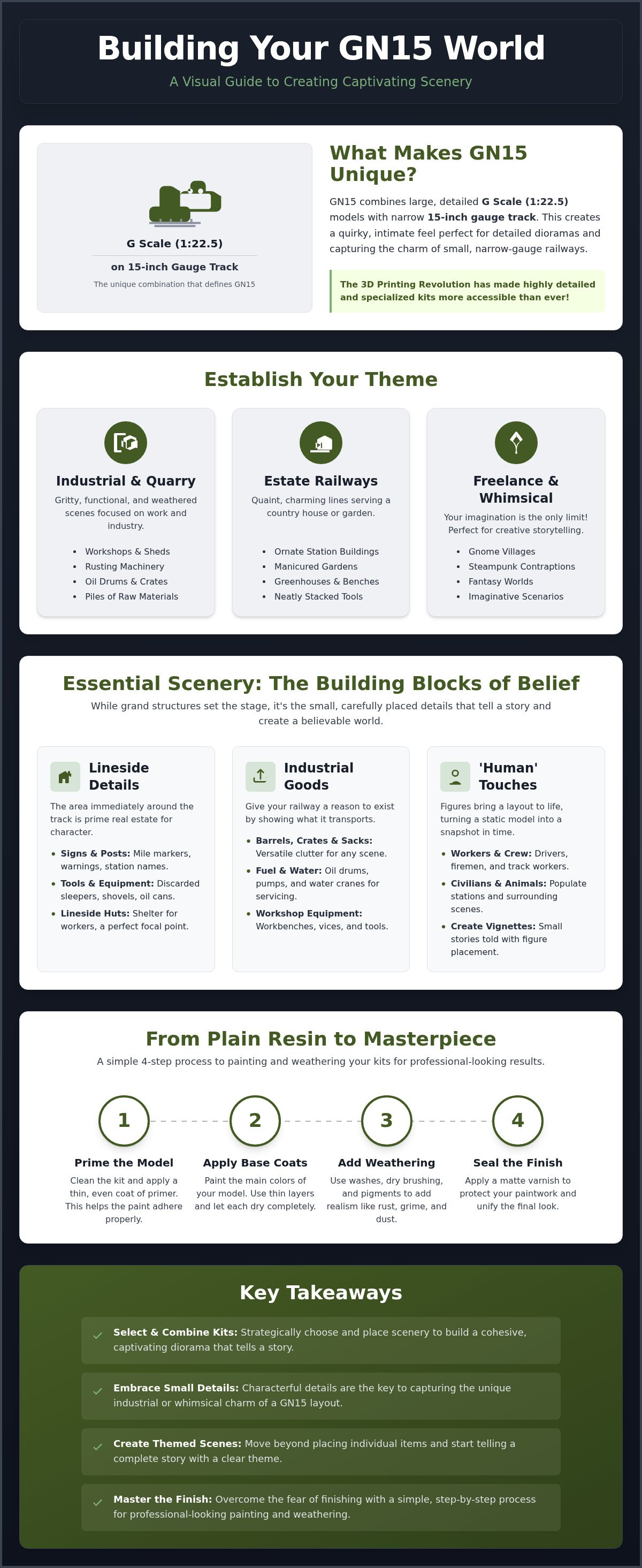
- Understand how to strategically select and combine different gn15 scenery kits to build a cohesive and visually captivating diorama.
- Learn why small, characterful details are the key to capturing the unique industrial or whimsical charm of a GN15 layout.
- Discover three distinct, themed scene ideas that move beyond placing individual items and start telling a complete story.
- Overcome the fear of finishing with our simple, step-by-step guide to painting and weathering for professional-looking results.
What is GN15 Scenery and Why is it Unique?
At its heart, GN15 modelling captures a unique and delightful charm by running G scale (1:22.5) models on track with a 15-inch gauge. This combination creates the illusion of a small, narrow-gauge railway, often found in industrial settings, on large private estates, or even in purely imaginative worlds. If you're new to this captivating niche, understanding What is GN15 is the first step to appreciating its creative potential. The scenery isn't just a backdrop; it’s the storyteller, providing the context and character that brings your miniature railway to life.
Unlike more common scales, the character of a GN15 layout is defined by its intimate and often quirky nature. The large scale allows for an incredible level of detail that draws the viewer in. In recent years, the rise of 3D printing has revolutionised the hobby, making highly detailed and specialised gn15 scenery kits more accessible than ever before. This technology allows creators to produce everything from intricate machinery to delicate architectural features, giving modellers unprecedented freedom to build a truly one-of-a-kind world.
This digital-first approach to creating miniature worlds has parallels in professional urban design, where advanced software like 3D Cityplanner allows planners to visualize and simulate entire city developments in intricate detail.
Establishing a Theme for Your Layout
The theme you choose dictates every scenic decision, from the track plan to the smallest details. GN15 lends itself particularly well to several distinct styles, each with its own character:
- Industrial & Quarry Lines: Think gritty, functional, and weathered. Scenery here includes workshops, corrugated iron sheds, rusting machinery, oil drums, and piles of raw materials. The focus is on a world of work and industry.
- Estate Railways: These are more quaint and charming. Imagine a line serving a country house, featuring ornate station buildings, manicured gardens, greenhouses, benches, and neatly stacked garden tools.
- Freelance & Whimsical Worlds: Here, your imagination is the only limit. From railways serving a gnome village to fantastical steampunk-inspired contraptions, GN15's slightly larger-than-life feel is perfect for creative storytelling.
The Importance of Scale and Proportion
Maintaining a consistent scale is crucial for creating a believable scene. For GN15, this means using G scale (1:22.5 or similar) figures, vehicles, and accessories. These larger items provide the correct visual weight and impact next to your locomotives and rolling stock. While you can sometimes use items from other garden railway scales, do so with caution. A figure or building that is slightly too small or large can instantly break the illusion you’ve worked so hard to build. The goal is to ensure every element, from a tiny spanner to a large workshop, looks like it belongs in the same world, and high-quality gn15 scenery kits are designed with this precise proportion in mind.
Essential Scenery Kits for a Captivating Diorama
The difference between a good diorama and a truly captivating one lies in the details. While grand structures set the stage, it's the small, carefully placed items that tell a story and create a believable world. These foundational gn15 scenery kits are the building blocks that transform a bare baseboard into a living, breathing scene. Mastering the placement of these details is a key step, and for broader techniques, the National Model Railroad Association offers an excellent Beginner's Guide to Scenery that covers the fundamentals of creating a realistic landscape.
Lineside Details: The Scenery Next to the Track
The area immediately surrounding your track is prime real estate for adding character. By thinking about what a real railway line looks like, you can add immense realism with just a few well-chosen pieces. Consider adding:
- Signs and Posts: Mile markers, gradient posts, station name boards, and warning signs add operational realism.
- Tools and Equipment: A discarded sleeper, a stack of shovels, or a forgotten oil can suggests recent track maintenance.
- Lineside Huts: These small structures provide shelter for platelayers and offer a perfect focal point for a small vignette.
Industrial & Commercial Details: Building Your World
Your narrow-gauge railway needs a reason to exist. Industrial details provide that narrative, showing what goods are being transported and where they are going. These items create a sense of purpose and place, whether it's a bustling goods yard or a quiet engine shed.
- Barrels, Crates, and Sacks: These are incredibly versatile for cluttering a loading dock, filling a wagon, or stacking against a warehouse wall.
- Fuel and Water: Oil drums, hand-cranked petrol pumps, and water cranes are essential for any engine servicing point.
- Workshop Equipment: Add a workbench, vice, and a collection of tools to an engine shed to create a detailed maintenance scene.
Figures & 'Human' Touches
A layout without people can feel static and lifeless. Adding figures and everyday objects instantly injects personality and a sense of scale into your diorama, turning a model into a miniature world.
- People and Animals: A driver leaning from his cab, a workman taking a break, or a stray cat adds a dynamic, story-telling element.
- Everyday Objects: A propped-up bicycle, a few milk churns waiting for collection, or a simple bench tells a subtle story.
- Iconic Details: For a classic British scene, nothing beats the iconic red phone box for an instant sense of time and place.
These small touches make all the difference. Browse our full range of GN15 scenery kits to find these details and many more to bring your unique world to life.
Creating a Scene: Themed Scenery Combination Ideas
A truly captivating diorama is more than just a collection of well-made models; it's a snapshot of a moment, telling a story without words. The key is to move beyond individual items and think like a set designer, combining elements to build a cohesive and narrative-driven scene. The true magic happens when individual items from various gn15 scenery kits are brought together to create context and atmosphere. Let's explore three distinct themes to inspire your next build.
Theme 1: The Busy Industrial Yard
To create the gritty, functional feel of an industrial setting, focus on organised clutter and signs of constant work. This isn't about mess, but about purpose. Think about combining different kits to suggest ongoing operations:
- Clutter and Cargo: Group oil drums, container collections, and piles of spare parts to show goods being moved and machinery being maintained.
- Makeshift Structures: Use corrugated iron sheets not just for roofing, but as materials for makeshift fences or to patch up the side of a wooden hut.
- Human Element: Placing a few figures of workers-one leaning on a shovel, another rolling a barrel-instantly suggests activity and gives the railway a reason to exist.
Theme 2: The Quiet Estate Siding
Capture the charm of a forgotten rural branch line by focusing on details that evoke a slower pace of life. Here, nature begins to reclaim the space. Combine a classic red phone box with a discarded old bicycle leaning against it. Add a line of milk churns on a platform waiting for collection and a simple wooden bench for a waiting passenger or a member of staff on their break. Generous use of static grass, tufts, and climbing foliage will soften the hard edges of the track and buildings, creating a gentle, peaceful atmosphere.
Theme 3: The Locomotive Maintenance Point
Every railway needs a place to service its engines, and these areas are rich with storytelling potential. Build your scene around a small engine shed or a dedicated siding. The focal point could be a detailed workbench complete with miniature tools, vices, and oil cans. Add character with realistic clutter: stack empty barrels and crates against a wall, and perhaps include a few beer kegs to hint at the crew's well-earned refreshments. These small details transform a simple siding into a believable, lived-in workspace. Finding the right combination of details is key, and exploring a diverse range of gn15 scenery kits can spark immense inspiration for your layout.
A Beginner's Guide to Finishing Your Scenery Kits
For many model makers, the final stage of painting and finishing is the most intimidating. The fear of "ruining" a perfectly assembled model can be paralysing. But here's the secret: you don't need to be a master artist to bring your layout to life. The goal isn't perfection; it's creating character and telling a story. A few simple techniques are all it takes to transform your gn15 scenery kits from plain resin into realistic, eye-catching features.
Preparation is Key
A great finish starts with good preparation, especially with 3D printed resin. Before a single drop of paint is applied, take a few moments to prepare the surface. This ensures your paint adheres properly and the final result is clean and professional.
- Clean Up: Gently scrape or file away any small bumps left from support structures. A sharp craft knife or a set of fine needle files works perfectly for this.
- Wash Thoroughly: Give your parts a gentle scrub in warm, soapy water with an old toothbrush. This removes any residual resin or mould release agent that could prevent paint from sticking.
- Prime the Surface: Apply a thin, even coat of primer. A grey or white matt spray primer from a can is ideal for creating a neutral base that helps paint adhere and makes colours appear more vibrant.
Basic Painting Techniques
With your model primed, it's time for the fun part. Start by applying your main 'base' colours using standard acrylic model paints. Don't worry about being perfectly neat. Once dry, you can bring out the detail. Create a 'wash' by heavily thinning a dark paint (like black or brown) with water and apply it over the model. It will naturally settle into crevices, creating instant shadows and depth. The final touch is 'dry brushing'-dip a flat brush in a light colour, wipe almost all of it off on a paper towel, and then lightly brush it over raised edges to create realistic highlights.
Weathering for Ultimate Realism
Weathering is the art of making something new look old, used, and exposed to the elements. This is what truly elevates good gn15 scenery kits to a level of exceptional realism. You can create simple rust effects on metal barrels by stippling on shades of dark brown and orange paint with a sponge. A thin, dirty brown wash can be applied to simulate grime, while specialist weathering powders can be brushed on to create dusty or muddy effects. These simple steps add a layer of history and believability to your entire diorama. Looking for tools? Check out our range of hobby essentials.
Your GN15 Masterpiece Awaits
You've now explored the unique charm of GN15 modelling, from selecting foundational kits to the intricate art of combining and finishing them to craft a truly immersive diorama. Remember, the most captivating layouts are those that tell a story. By carefully layering details and textures, you can transform simple components into a believable, character-filled world that draws the viewer in.
Transforming a blank baseboard into a vibrant scene is one of the most rewarding aspects of the hobby. At Narrow Minded Railworks, we're passionate about providing the building blocks for your vision. Our growing range of high-quality gn15 scenery kits are all unique designs, created in-house and 3D printed in premium resin to capture the finest details. We proudly ship to dedicated modellers across the UK and worldwide, ensuring you can get the perfect pieces for your project, wherever you are.
Explore our unique collection of GN15 scenery kits and start building your world today!
The only limit is your imagination. Happy modelling!
Frequently Asked Questions
What scale figures should I use for a GN15 layout?
GN15 modelling uses G scale proportions (approximately 1:24) on narrow 16.5mm track to represent a 15-inch gauge railway. Therefore, you should use G scale or 1:24 scale figures. These are perfectly sized to interact with your locomotives, rolling stock, and structures, ensuring your diorama looks correct and believable. A wide range of G scale figures, from railway workers to civilians, are available from various UK hobby suppliers.
Do I need special glue or paint for 3D printed resin scenery kits?
No special products are required; standard high-quality hobby supplies work perfectly. For assembly, a cyanoacrylate adhesive (superglue) provides a strong, fast bond for resin parts. Before painting, we highly recommend applying a light coat of primer from a spray can. Afterwards, any acrylic model paints, such as those from Vallejo, Humbrol, or Citadel, will adhere beautifully and allow you to achieve fantastic results on your scenery pieces.
How can I make my scenery look more realistic and less like plastic?
Weathering is the key to achieving realism. Start by applying a dark "wash" (thinned brown or black paint) over the item to create depth and shadow in the recesses. Then, use a technique called dry-brushing with a lighter colour to pick out the raised details and texture. Finally, applying a matte varnish spray will eliminate any unnatural plastic shine. Adding scenic details like moss, rust effects, or grime will complete the illusion.
Can I use G scale scenery items on my GN15 layout?
Yes, absolutely. As GN15 is built to G scale (1:24) proportions, any scenery items designed for G scale are a perfect match for your layout. This includes everything from buildings and trackside details to vehicles and accessories. Combining commercially available G scale items with specific gn15 scenery kits is an excellent strategy for creating a richly detailed and correctly proportioned world for your miniature railway to inhabit.
What are the most essential scenery items to buy first for a new layout?
For a new layout, begin with items that deliver the biggest visual impact. Start with ground cover; basic scenic scatter and static grass will immediately transform a bare baseboard. Next, add a primary focal point like a small engine shed, a water tower, or one of our foundational gn15 scenery kits. Finally, add some vertical elements like a few trees or large bushes to frame your scene and add a sense of scale.
How do I securely fix scenery items to my baseboard?
The best method depends on the item's weight. For lightweight ground cover like scatter and flock, a generous application of diluted PVA wood glue is the standard and most effective choice. For heavier resin or plastic buildings, a stronger adhesive is needed. A hot glue gun provides a quick, secure bond, while a two-part epoxy adhesive will create an extremely strong and permanent attachment for your main structures.